
Best Lip Balm for Wind and Cold + Cuticle Oils
She glanced at her hands during a morning coffee break — the soft sheen of care was the quiet reminder that small rituals matter. Outside, winter was rehearsing its drama. Wind threaded through city streets, tugging at hemlines and tempering cheeks to pink. Inside, the office hummed with deadlines, dry heat, and the tap-tap of keyboards. It was the season of steaming mugs and wool scarves. It was also the season of chapped lips and frayed cuticles.
You know the feeling. You swipe on whatever lip balm is in your bag, hoping it’ll last through your commute. Ten minutes later, the sting returns and you catch yourself licking your lips, which only makes things worse. Your cuticles snag on your sweater sleeve, tiny reminders that your hands have been doing a lot — dishes, hand sanitizer, laundry, typing — without enough help.
Let’s be honest: cold weather is relentless, and wind has no mercy. But the right lip balm and a few drops of nourishing oil can put a shield between you and the elements. When you choose well — ingredients, texture, routine — you don’t just avoid discomfort. You build a small, beautiful ritual that feels like a warm scarf for your face and fingertips.
Imagine this instead. The door opens to the street’s chill, and you feel prepared. There’s a soft barrier on your lips that doesn’t feel sticky, just secure. Your cuticles look smooth and even, as if you’ve had a fresh manicure, even though you did it at home in minutes. No drama. No fuss. Just steady protection and a moment of comfort.
You can almost feel the smoothness as you twist up a balm that melts on contact. A whisper of beeswax, a cushion of shea butter, a hint of lanolin if your skin loves it. Or maybe it’s a vegan blend that leans on candelilla and plant oils. Meanwhile, a tiny rollerball of jojoba and lavender waits in your pocket, ready to soften edges and keep hangnails from becoming mini emergencies.
Because this is what winter care looks like when it’s sustainable: not a heavy routine, but smart, focused steps that fit your day. Your best lip balm protects against wind and cold without constant reapplication. Your essential oils for cuticle health are diluted safely, glide on fast, and smell like calm.
And when you look down at your hands mid-afternoon — that quiet, private check-in — you notice they tell a different story. You see consistency. You see care. You see your life, not interrupted by dryness, but supported by it: the mug, the keyboard, the kid’s art project, the grocery list, the text to your friend. The small acts of protection, repeated, become their own kind of power.
A winter-ready routine blends the best lip balm for wind and cold with gentle essential oils for cuticle health — simple steps that protect, soothe, and restore.
Why winter targets lips and cuticles
Lips are delicate. They lack oil glands, so they don’t self-lubricate the way the rest of your skin does. The skin here is thin, with fewer layers and less melanin. Wind pulls moisture away. Cold air holds less humidity. Indoor heating bakes the air even drier. It’s the perfect storm for flaking, tightness, and cracks.
Cuticles are your nails’ security guards. That thin seal at the base of each nail protects the growing nail from bacteria and irritants. When the cuticle dries, it lifts and tears. Suddenly, everything catches — sweaters, hair, paper. Add frequent hand washing and alcohol-based sanitizers and the cuticle’s tiny lip becomes ragged, red, and sore.
Common winter stressors:
- Wind, which accelerates transepidermal water loss.
- Cold temperatures, which constrict blood flow and slow repair.
- Dry indoor heat, which depletes ambient humidity.
- Saliva contact from lip-licking, which evaporates and worsens dryness.
- Harsh soaps and sanitizers, which strip oils from the nail fold and skin.
What you might notice:
- Lips that sting, peel, or feel tight moments after being outside.
- Balms that seem to vanish fast, leading to frequent reapplication.
- Cuticles that lift, forming hangnails or inflamed edges.
- Fine cracks around the lip line or fingertips that make smiling or typing uncomfortable.
The good news: you can outsmart all of it with the right formula and a repeatable routine.
What makes a lip balm winter‑proof
The best lip balm for wind and cold does two jobs at once. It draws water into the skin and then locks it in place. Texture matters. Ingredients matter. Timing matters.
Key ingredients to look for:
- Occlusives: Petrolatum, lanolin, shea butter, beeswax, candelilla wax. These create a protective film that reduces moisture loss.
- Humectants: Glycerin, hyaluronic acid, sodium PCA, sorbitol. These attract water to soften and plump.
- Barrier builders: Ceramides, cholesterol, fatty acids. These help restore the skin’s natural lipid matrix.
- Soothers and antioxidants: Vitamin E (tocopherol), bisabolol, panthenol, green tea extract. These calm irritation and fend off environmental stress.
- SPF for daytime: A mineral or chemical SPF protects against UV, which is still powerful in winter and amplified by snow glare.
Form matters:
- Sticks: Great for on-the-go, windproof application, and mess-free use with gloves. Often wax-forward; look for added oils to keep glide.
- Squeeze tubes: Hygienic and easy to layer. Many hydrating gels and butter-rich balms come in tubes.
- Pots: Tend to be richer and more occlusive. Best for at-home or bedside rituals.
Ingredients to go easy on:
- Strong menthol, camphor, eucalyptus, or cinnamon. These can tingle but often irritate and dry.
- Citrus oils on lips, especially before sun. They can be sensitizing.
- Overly fragranced formulas if your lips are already delicate.
Helpful combinations:
- A humectant layer first, then an occlusive topcoat.
- A daytime balm with SPF, then a thicker occlusive at night.
Pro tip: Apply balm on slightly damp lips to trap water. A fine mist or a sip of water before application maximizes the humectants’ work.
According to an Irene Beauty guide, a lip balm that balances humectants and occlusives can dramatically reduce the cycle of reapplying every fifteen minutes. Look for simple ingredient lists, avoid known irritants if you’re sensitive, and keep one balm for day and one richer option for night.
What to do when lips are already cracked
- Use a gentle, fragrance-free balm with petrolatum or lanolin.
- Avoid exfoliating until the cracks seal.
- Pat on a thin layer, then a thicker second coat at night.
- If it stings badly or bleeds, pare back to minimal ingredients and give it 48 hours.
Choosing vegan or lanolin-based options
Lanolin is a superb occlusive and emollient, especially in harsh wind. Some people love it; some are allergic. If you’re sensitive or prefer vegan formulas, look for blends with plant waxes (candelilla, carnauba) and butters (shea, cocoa, mango) supported by ceramides and glycerin.
Smart application: routines that stick
A great formula is only half the story. Consistency is what turns “better” into “protected.”
A simple 24-hour lip routine:
- Morning: After brushing your teeth, dab on a hydrating balm with humectants and SPF. Sip water. Then top with an occlusive if wind is strong.
- Commute: Reapply before stepping into the cold. Think of it like a scarf for your lips.
- Midday: If you’re in dry indoor air, reapply before lunch and after. Avoid licking; sip water instead.
- Evening: After cleansing, apply a thicker, wax-butter balm. Press, don’t rub. Let it sit.
- Overnight: Layer a repairing balm with petrolatum or ceramides. Wake up to smoother lips.
Cuticle rhythm to pair with it:
- After handwashing: While hands are still slightly damp, glide on a drop of cuticle oil and press around the nail fold.
- Evening ritual: Massage a richer oil or balm into nails and knuckles. Wear cotton gloves for 30 minutes for a quick cocoon.
- Weekly: Push back softened cuticles with a silicone pusher after a shower. No cutting. Snip only lifted hangnails.
Safe, minimal exfoliation for lips:
- Once or twice a week, after a shower, use a soft, damp washcloth to gently buff. No sugar scrubs if your lips are cracked. The goal is to lift flakes, not thin the skin.
Hydration and environment:
- Keep a glass or bottle near your workspace. Sips add up.
- Consider a small humidifier near your desk or bed. Even a few percent more humidity helps.
Actionable tips you can start today:
- Apply lip balm on damp lips, then seal with a waxy layer before going outside.
- Pair every hand wash with one drop of cuticle oil. Habit stack: soap, rinse, oil.
- Keep a “wind kit” in your coat: lip balm stick, oil pen, thin gloves.
- Switch to a gentle hand soap and lukewarm water to preserve oils.
- Avoid picking flakes; press on a balm and let it lift naturally.
Essential oils for cuticle health
Essential oils can be powerful allies for cuticles, if used correctly. The key is dilution and gentleness. Think of essential oils as concentration; a little goes a long way.
Start with a carrier oil:
- Jojoba oil: Skin-mimicking, light, and sinks in quickly.
- Sweet almond oil: Nourishing and softening; great slip for massage.
- Squalane (olive or sugarcane): Lightweight, fast-absorbing, non-greasy.
- Argan oil: Rich in vitamin E; good for brittle nails.
- Rosehip seed oil: Brimming with fatty acids; use sparingly for added nourishment.
Supportive essential oils for nails and cuticles:
- Lavender: Calming, skin-friendly, ideal for nightly use.
- Tea tree: Antimicrobial; use lightly if you’re prone to minor irritation from hangnails.
- Frankincense: Traditionally used for skin support; adds a grounding scent.
- German or Roman chamomile: Soothing for redness-prone skin.
- Myrrh: Classic in nail blends; adds resilience and softness.
Safe dilution guidelines:
- 1% dilution for daily use: 1 drop essential oil per teaspoon (5 mL) of carrier oil.
- 2% dilution for targeted, short-term support: 2 drops per teaspoon for healthy adults.
- For pregnancy, sensitive skin, or chronic conditions: Consult a professional and stick to 0.5–1% with gentle oils like lavender or chamomile.
Patch test before regular use. Apply a small amount to the inner forearm and wait 24 hours.
A simple, effective cuticle oil recipe:
- 2 teaspoons jojoba oil
- 1 teaspoon sweet almond oil
- 3 drops lavender essential oil
- 1 drop frankincense essential oil
- Optional: Pierce a vitamin E capsule and add a drop for antioxidant support
Combine in a small roller bottle. Roll a thin line around the base of each nail, then massage for 20–30 seconds.
Why it works:
- Jojoba mimics skin’s natural sebum, helping the cuticle lie flat.
- Almond oil softens and adds slip for massage.
- Lavender eases irritation and relaxes the senses.
- Frankincense brings a subtle, resinous calm and supports the skin’s look of resilience.
- Vitamin E enhances the blend’s stability and adds a comforting cushion.
When to avoid certain oils:
- Skip “hot” oils like clove or oregano near nails; they’re too strong for daily use.
- Avoid undiluted essential oils. Full strength can irritate and worsen dryness.
- If you have onycholysis, infection, or painful swelling, pause essential oils and consult a clinician.
Ready-made vs. DIY cuticle oils
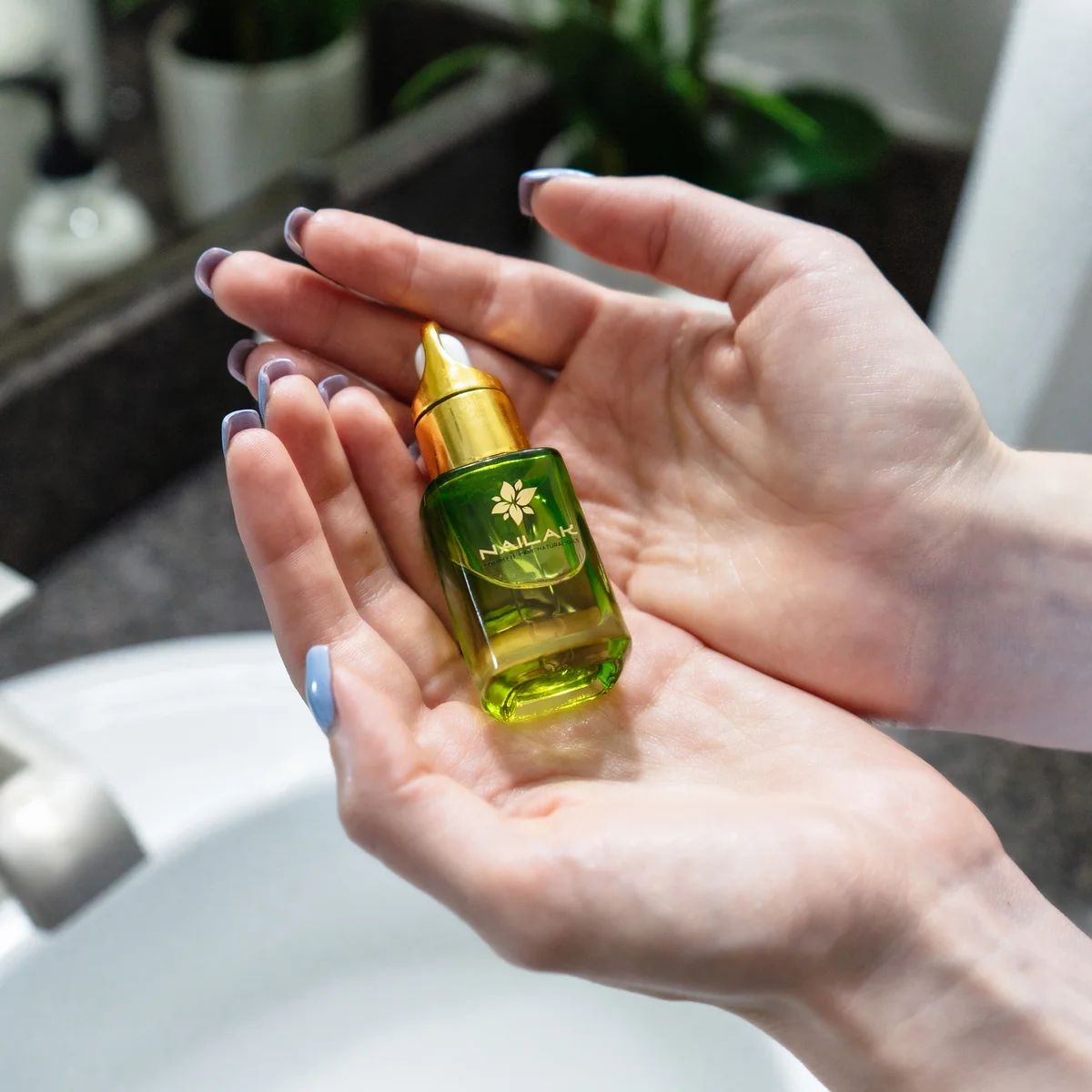
Ready-made cuticle pens are discreet and travel-friendly. Many feature jojoba or squalane and a precise brush or felt tip. DIY gives you control over scent and strength. Both can be effective. Choose what you’ll use consistently.
How to apply for best results:
- After washing hands, pat dry and leave a hint of moisture.
- Apply a thin stripe of oil around the base and sides of each nail.
- Press and roll with your thumb to massage. Focus on the nail fold.
- Let it sit for one to two minutes before touching paper or fabric.
Frequency:
- Daily during winter or when hands feel tight.
- Twice daily if using sanitizers often.
- Maintenance: 3–4 times a week once your cuticles are supple.
Pairing lip care and hand care on the go
A tiny toolkit keeps your day smooth. Think of it as your winter mini wardrobe — layers you can add, remove, and reapply.
Build a pocket-size routine:
- Lip balm stick for wind and walking.
- Squeeze-tube balm with humectants for indoor rehydration.
- Cuticle oil pen or roller for post-wash touch-ups.
- Thin gloves or glove liners to wear while commuting.
- A soft, reusable cloth pouch to keep everything clean.
Habit stacking makes it second nature:
- Before stepping outdoors: balm, gloves, phone.
- After washing hands: oil, then hand cream.
- Before bed: phone on charger, balm on lips, oil on cuticles.
Office-friendly tweaks:
- Keep a tube balm near your keyboard. Reapply after coffee or tea.
- Choose a low-scent oil for shared spaces.
- Use a ceramic dish to corral products at your desk; seeing them prompts use.
Travel and gym strategies:
- Pack duplicates in your gym bag and weekender so you never forget.
- After a workout, rehydrate lips, then oil cuticles before leaving the locker room.
- On planes, reapply balm every few hours; cabin air is desert-dry.
Small tools, big impact:
- A silicone cuticle pusher is gentler than metal.
- A fine nail file prevents tiny snags from escalating.
- Cotton gloves over oil turn a 10-minute TV break into a mini spa.
Clean beauty or clinical strength: choose what works
The best lip balm is the one your skin loves and you’ll actually use. That might be classic petrolatum. It might be a certified clean formula with plant waxes and ceramides. It might be lanolin-heavy for a ski trip, then lighter and vegan for daily city errands.
Evidence-based notes:
- Petrolatum is highly occlusive and well-studied. It’s inert and effective at reducing water loss.
- Lanolin is deeply emollient but can trigger allergies in some. Patch test if you’re new to it.
- Plant waxes (candelilla, carnauba) and butters (shea, mango, cocoa) create a protective film without animal-derived ingredients.
- Ceramides help repair the barrier. Look for “ceramide NP/AP/EOP” in the list.
- Fragrance-free formulas are safest when lips are cracked.
Budget and texture:
- You don’t need a luxury label for results. Texture and smart layering often matter more than price.
- Keep a light daytime balm for reapplication and a richer night balm for repair.
- If lipstick is part of your routine, use a thin layer of balm, let it set, then blot before color.
What about flavored balms?
- A subtle flavor can make reapplication pleasant but may encourage lip-licking. Choose wisely.
- If you’re sensitive, opt for unflavored and avoid essential oils on lips.
When to call in extra care:
- If lips split at the corners repeatedly, evaluate for irritants and consider a zinc oxide balm. Persistent issues may warrant a clinician’s advice.
- If cuticles are inflamed or painful, simplify to a bland, fragrance-free ointment until calm, then reintroduce oils.
Little rituals, big confidence
There’s a specific kind of confidence that comes from feeling put together in small ways. It’s not about perfection or polish. It’s about the quiet ease of lips that don’t sting when you smile, and cuticles that glide instead of snag. It’s about knowing you can walk into winter weather — or a long meeting — with a soft barrier of comfort.
These rituals don’t steal time; they create it. The minute you spend smoothing balm at the red light prevents the ten minutes you’d lose later to discomfort. The quick massage with oil while your tea steeps turns into a pause, a breath, a reconnect. Winter can be loud. Your self-care can be soft, steady, and yours.
Choose a balm that feels like a gentle promise. Choose an oil that turns your hands from busy to cared-for. Layer, press, breathe. The rest of your day meets you where you are: ready.
Frequently Asked Questions (FAQ)
Q: How often should I apply lip balm in winter? A: Start with morning, commute, midday, evening, and bedtime. If air is very dry, add a quick swipe every few hours. Apply on slightly damp lips and top with a more occlusive layer before going outside to extend wear.
Q: Do I need SPF on my lips when it’s cold and cloudy? A: Yes. UV rays still reach your skin in winter, and snow reflects them. Use a daytime lip balm with SPF, reapply every two hours outdoors, and switch to a richer non-SPF balm at night.
Q: Which essential oils are safest for daily cuticle care? A: Lavender and chamomile are gentle choices at 1% dilution. Tea tree can help if you’re prone to minor irritation but keep it at or below 1%. Always dilute in a carrier oil like jojoba or almond and patch test.
Q: Can I use my lip balm on cuticles in a pinch? A: Yes. A fragrance-free, occlusive balm can soften cuticles and stop snagging. It’s not a substitute for nutrient-rich cuticle oil long term, but it’s a handy stopgap.
Q: How do I fix cracked cuticles quickly without a manicure? A: Clean hands, then apply a thick, fragrance-free ointment to the cuticle and nail fold. Cover with cotton gloves for 30 minutes. For the next few days, apply a diluted cuticle oil morning and night and avoid picking or cutting.
Estimated word count: 2360 words