
Natural Nail Repair with Local Beauty Rituals
She glanced at her hands during a morning coffee break — the soft sheen of care was the quiet reminder that small rituals matter. But today, the sheen was gone. A couple of nails were splitting, one edge snagged on her sweater, and the once-gleaming gel had left everything a little thinner than she remembered. There it was again: that tug of frustration followed by a small sigh, the one you exhale when something so simple feels out of reach.
You can almost feel the smoothness you want, the confidence of tapping your keyboard without flinching, the little thrill of applying a clear coat and seeing healthy pink peeking through. Nails are small, but they’re a barometer of how gently we’re treating ourselves. They record dishwashing without gloves, sanitizer overload, the week you forgot your supplements, the late-night polish change with acetone and a paper towel. They tell a story of pace and pressure.
Let’s be honest: nothing feels as polished as a fresh manicure. Yet the best manicures — the ones that last — start with strong nail plates, hydrated cuticles, and a kinder rhythm. That rhythm often takes root in rituals, especially those anchored to the places we call home. For many of us, beauty isn’t just a shopping list; it’s inherited wisdom. It’s the way your grandmother warmed a little oil between her palms before massaging your nail beds, or how a market vendor taught you to steep rooibos for a calming soak. It’s a love letter from the earth to your hands.
Today, we’re returning to those roots. We’re exploring local beauty rituals and earth-born ingredients that restore damaged nails naturally — without fuss or harshness. Think marula oil gliding over brittle edges, aloe pulp softening ragged cuticles, and a Sunday soak that smells like a summer garden. We’ll blend tradition with modern science, so your routine feels as practical as it is poetic. Because when your nails are nourished, your gestures feel more certain. You reach for your bag. You sign your name. You hold a hand you love.
If your nails are peeling, thin from gel or acrylics, or just tired from life, you’re not stuck. You need a plan that respects both biology and culture — a plan that’s doable on a busy weeknight and special enough to become your favorite ritual. We’ll map out a four-week nail reset; highlight local botanicals that strengthen, protect, and glow; and share a weekly ceremony you’ll actually keep. Along the way, we’ll keep the tone low-pressure: small steps, consistent care, and a lot of gentleness.
And when you finally catch your hands in the light and notice that soft, healthy sheen, you’ll feel it — the quiet, elegant proof that small rituals change everything.

Quick Summary: Restore damaged nails naturally with a gentle four-week reset, local botanical oils, a weekly home ritual, smarter salon habits, and supportive nutrition.
Why nails break: modern life vs. nature
Damaged nails aren’t just “bad luck.” They’re often the result of daily friction that outpaces repair.
Common culprits include:
- Frequent gel or acrylic cycles without breaks.
- Aggressive filing and over-buffing.
- Harsh removers, detergents, and sanitizers.
- Long, hot showers and water exposure that swell and weaken nail layers.
- Nutrient gaps and dehydration.
- Stress, which can lead to picking, biting, or neglect.
Nails are made of keratin. Picture layers of shingles on a roof. When the natural oils that glue those layers are stripped, or when the keratin is thinned, the “shingles” lift. Your nails peel, fray, and break.
The goal of natural nail repair is to replenish lipids, support keratin integrity, reduce friction, and work with the nail’s slow growth cycle. Your body wants to heal. Our job is to give it the space and supplies.
Foundations of natural nail repair
Here’s a gentle four-week reset to restore damaged nails naturally. It’s simple, consistent, and calming.
- Trim and shape short
- Aim for a rounded-square shape to reduce snagging.
- Keep length short so the free edge isn’t leveraged by daily tasks.
- Pause gel and acrylics
- Commit to four weeks without enhancements.
- If you must wear polish, choose a breathable base and remove gently.
- Switch to “soft” removal
- Use an acetone wrap with a protective oil layer on skin and cuticles.
- Never peel or pick. If it resists, rewrap and breathe.
- Oil, twice daily
- Massage a few drops of nutrient-dense oil into nails and cuticles morning and night.
- Focus on the matrix area (the half-moon zone) where growth begins.
- Gloves for chores
- Wear nitrile or vinyl gloves for cleaning, laundry, and dishwashing.
- Dry thoroughly after washing hands, then reapply oil or cream.
- Keep filing minimal
- A fine-grit glass file prevents micro-tears.
- File in one direction to avoid shredding layers.
- Moisturize like it matters
- Use a hand cream with lipids and humectants: shea, glycerin, squalane.
- Follow with oil to seal. This “cream then oil” combo locks in hydration.
- Adopt a weekly ritual (details below)
- Soak, smooth, oil, and rest.
- Ritual makes consistency feel luxurious, not dutiful.
Track your progress weekly. You should see less peeling by week two and a smoother surface by week four. Remember: nails grow about 3 mm per month. Your patience fuels the outcome.
Local botanicals that heal
Plants rooted in local soil carry a potency that feels both practical and soulful. These are standouts for nail repair, especially if your nails are brittle, peeling, or thin.
Marula: fast-absorbing strength
Rich in oleic acid and antioxidants, marula oil softens while sealing fragile edges.
How to use:
- Warm 2–3 drops between your fingertips.
- Press into nails and cuticles, then massage for one minute.
- Layer over damp hands to trap moisture.
Baobab: deep moisture for peeling
Baobab oil brings omega-3, -6, and -9 fatty acids. It’s a cushion for thin plates.
How to use:
- Nightly, after cream, press baobab into the nail plate.
- Focus on the proximal nail fold (just above the cuticle).
Kalahari melon: light but lasting
This light, linoleic-rich oil helps restore the lipid “glue” between nail layers without heaviness.
How to use:
- Morning application under sunscreen and rings.
- Ideal before typing to prevent greasy residue.
Rooibos: calming, antioxidant soak
Rooibos tea contains polyphenols that soothe skin and may counter daily oxidative stress.
How to use:
- Brew a strong cup; let cool to a warm soak.
- Add a teaspoon of honey and a splash of aloe.
- Soak fingertips for 5–7 minutes, once weekly.
Aloe: instant comfort
Aloe gel hydrates on contact and helps settle irritated skin around torn cuticles.
How to use:
- Apply a pea-sized amount, let it sink in.
- Seal with oil after one minute to keep the moisture.
Shea butter: protective seal
Shea’s sterols and fatty acids linger, forming a soft barrier that reduces trans-epidermal water loss.
How to use:
- At bedtime, massage a tiny amount into hands and nails.
- Slip on lightweight cotton gloves to amplify overnight repair.
Honey and salt: gentle exfoliation
Fine salt removes roughness; honey draws in moisture and brings a natural glow.
How to use:
- Mix one teaspoon honey with a pinch of fine salt.
- Massage over hands for 30 seconds, rinse, then oil.
Mongongo: heat and UV helper
Mongongo oil contains eleostearic acid, which may support resilience under light exposure. It’s a smart pick if you use a lamp for polish.
How to use:
- Apply a whisper-thin layer after cleansing hands post-cure.
- Focus on cuticles to counter dryness.
According to a heritage rituals piece, honoring local ingredients isn’t just nostalgic — it’s a practical way to bring sustainability and meaning to everyday care. When you choose oils and butters sourced close to home, you support your community and reduce packaging miles, all while feeding your nails exactly what they need.
Pro tip: Rotate oils if you like, but give each at least a week. Nails appreciate consistency.
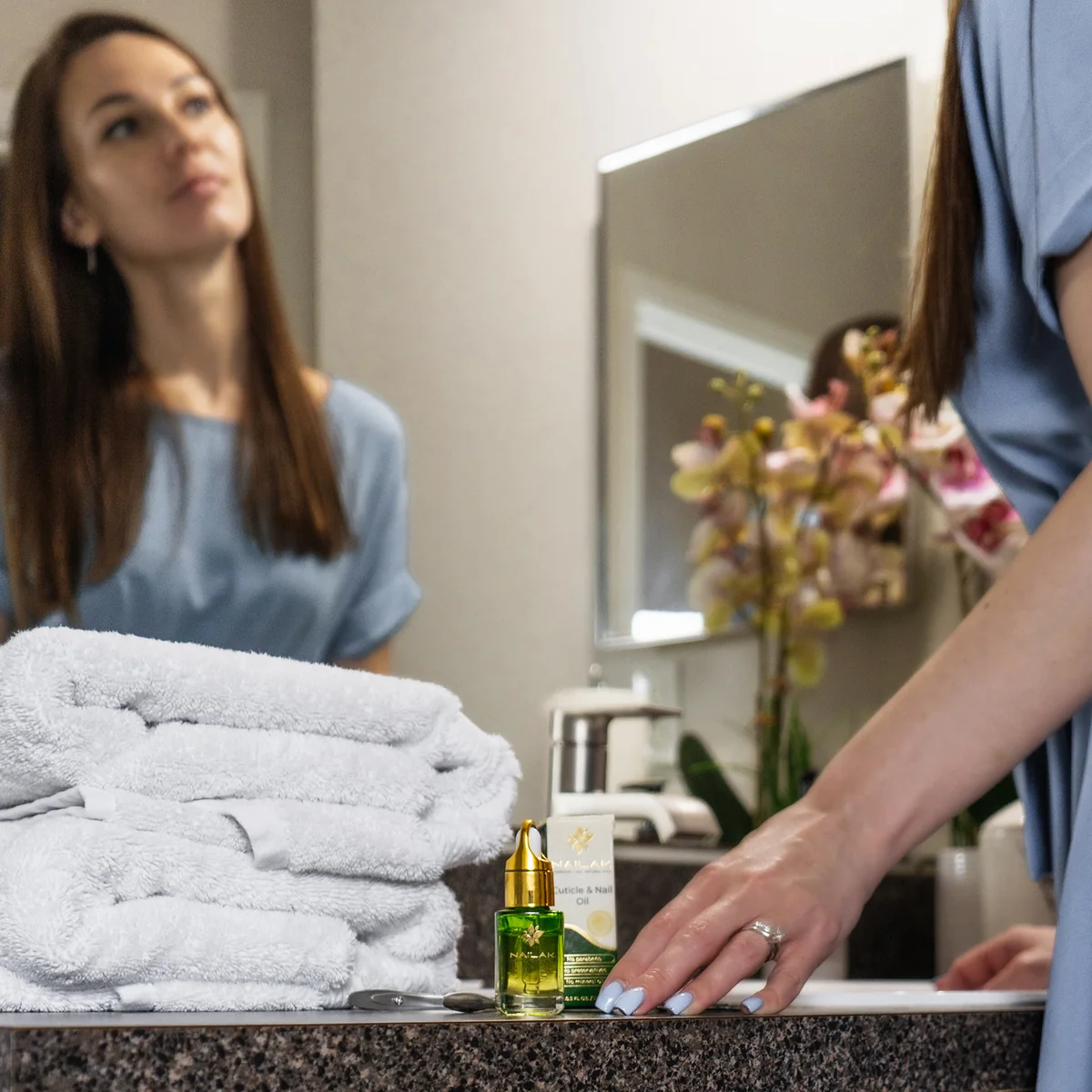
A weekly ritual you’ll keep
Ritual turns care into a habit you look forward to. Here’s a 20-minute routine for Sunday evening or any quiet moment in your week.
- Prepare a tiny sanctuary
- Put your phone on do-not-disturb.
- Fill a small bowl with warm water, a rooibos tea bag, and a teaspoon of honey.
- Lay out your tools: glass file, orangewood stick, soft buffer, towel, oil, and cream.
- Soak and soften (5–7 minutes)
- Dip fingertips in the tea soak.
- Let your shoulders drop. Breathe slow. Feel the warmth soften ragged skin.
- Gentle exfoliation (1 minute)
- Pat dry. Apply a dab of honey-salt scrub.
- Rinse and pat; your hands should feel fresh, not stripped.
- Shape and smooth (3 minutes)
- File in one direction to a short, rounded-square.
- If ridges are pronounced, use a soft buffer with a light touch. No more than 6 strokes per nail.
- Cuticle kindness (2 minutes)
- Apply a dot of aloe, then nudge cuticles back with an orangewood stick.
- Never cut live tissue. Trim only hangnails.
- Oil and massage (3 minutes)
- Warm your chosen oil. Press into the nail plate and cuticles.
- Massage each finger for 10 seconds. Notice how the oil sinks in.
- Seal and rest (2 minutes)
- Apply a thin veil of shea butter or a rich hand cream.
- If you can, slip on gloves and read a few pages in a book.
That’s it. Elegant and simple.
Busy-week variation (5 minutes):
- Cleanse hands. Apply oil to nails, then cream to hands.
- Press oil again on the free edge to seal layers.
- Breathe for 60 seconds before returning to your day.
DIY cuticle oil blend:
- 1 teaspoon marula oil
- 1 teaspoon jojoba oil
- 6 drops vitamin E
- Optional: 1 drop lavender or rosemary (if you enjoy scent) Mix in a small roller bottle. Use twice daily. Jojoba mimics skin sebum; marula adds slip and antioxidants; vitamin E rounds out the protection.
Track a single sign of progress each week: fewer snags, less peeling, or a smoother polish application. Celebrate tiny wins. They stack up.
Food and supplements for resilience
Great nails start at the table. Your nail plate reflects what you consistently eat and drink.
Focus on:
- Protein: Nails are keratin. Include eggs, legumes, fish, tofu, and lean meats.
- Biotin-rich foods: Eggs, peanuts, almonds, and sweet potatoes.
- Zinc: Pumpkin seeds, chickpeas, and seafood support healthy growth.
- Iron: Dark leafy greens, lentils, and red meat if you eat it. Pair plant sources with vitamin C.
- Omega-3 fats: Sardines, salmon, chia, or flax for flexible, less brittle nails.
- Silica: Oats and cucumbers can support connective tissue.
- Hydration: Aim for a steady intake. Dehydration shows up fast in nail brittleness.
Simple 3-day nail-friendly menu ideas:
- Day 1: Greek yogurt with oats and berries; chickpea salad with cucumber; salmon, roasted sweet potato, and greens.
- Day 2: Scrambled eggs with spinach; lentil soup; tofu stir-fry with sesame and broccoli.
- Day 3: Cottage cheese and sliced almonds; tuna with avocado on whole grain toast; lean beef or mushroom stew, quinoa, and carrots.
Supplements can help when your diet is inconsistent, but food is your foundation. If you choose a supplement, keep it simple:
- Biotin: Low-dose daily amounts may support brittle nails. Consistency matters more than high doses.
- Collagen peptides: Emerging evidence suggests support for nail growth and breakage reduction for some people.
- A quality multivitamin: Insurance for nutrient gaps during busy weeks.
Always personalize. Your body, your rhythms, your needs.
Salon habits that protect your gains
Love your salon time? Keep it — just make it safer for healing nails.
Smart requests:
- Ask for a gentle, no-sanding base for gel on sensitive nails.
- Avoid aggressive e-filing on the natural plate.
- Opt for soak-off rather than picking or scraping.
- Request thin coats and careful cure times to limit overexposure.
Before removal:
- Coat cuticles and surrounding skin with oil or a barrier cream.
- Choose a soak-off wrap and be patient with timing.
During the appointment:
- If nails are tender, request a “shape and treatment” appointment instead of color.
- Bring your own oil. Massage it in as you wait for polish to dry.
Between gel cycles:
- Plan a “gel vacation” every two to three cycles.
- Use your weekly ritual during breaks to rebuild resilience.
At-home polish tips:
- Use a ridge-filling base to smooth while you heal.
- Avoid back-to-back removal sessions. Give nails a day or two sans polish.
Remember: you’re the client. Your comfort and nail health come first.
Mindful hands, confident heart
There’s a quiet confidence in well-cared-for hands. It isn’t about a perfect manicure or a trending color. It’s the feeling that your gestures carry care. That you can sign a document, serve dinner, or lace your shoes with a soft, steady grace.
Restoring damaged nails naturally is a lesson in balance. You step out of hurry and into ritual. You reach for local oils that smell faintly of sun and soil. You measure progress not only in growth lines but in how you treat yourself during the process — with patience, with presence, with pride.
When you lift your hands to the light and see health returning, notice what else has returned: your sense of pace, your belief that small habits matter, your trust in the earth and in yourself. That’s the beauty we’re celebrating — from the earth to your hands.
Frequently Asked Questions (FAQ)
Q: How long does it take to restore damaged nails naturally? A: Most people notice less peeling and smoother texture in two to three weeks with consistent oiling and protection. Full regrowth from cuticle to tip takes around three to six months for fingernails, depending on your genetics, diet, and daily habits. Stay steady with your routine, even when change feels slow.
Q: Can I wear nail polish during the repair phase? A: Yes, in moderation. Choose a gentle, strengthening base coat and remove polish with care. Avoid back-to-back removals and let nails breathe for a couple of days between manicures. If your nails are very thin, skip color for two to four weeks and focus on oiling, cream, and short length.
Q: Which oil is best for brittle, peeling nails? A: Jojoba and marula are great daily staples because they absorb fast and mimic natural skin lipids. For nighttime, layer a richer option like baobab or shea butter over your oil to seal hydration. Apply twice a day and press oil along the free edge to “glue” layers.
Q: How do I stop picking at my cuticles and hangnails? A: Replace the habit with a ritual. Keep a mini oil roller in your bag and apply when you feel the urge to pick. Smooth any rough edges with a glass file instead of pulling. Trim only dead hangnails with clean nippers, then seal with oil and cream. Consistency reduces triggers like dryness and snagging.
Estimated word count: 2420 words