
Vegan Nail Oil for Cuticles: Nourish Naturally
She glanced at her hands during a morning coffee break — the soft sheen of care was the quiet reminder that small rituals matter. Yesterday’s to-do list showed up at the edges of her cuticles: a frayed hangnail from unpacking packages, a crescent of dryness from too many sanitizers, a tiny tear that caught on her sweater. She rolled a small glass bottle between her palms to warm it, breathed in a whisper of citrus, and pressed a drop along each nail bed. The oil traveled like kindness — shining, smoothing, coaxing the skin to soften and lay flat. The world didn’t change, but her hands felt ready for it.
There’s something distinctly reassuring about the pause that happens when we care for our cuticles. It’s not flashy. It’s not public. It’s the quiet romance of daily maintenance, the kind that outlasts trends because it’s about feeling at home in yourself. Vegan nail oil for cuticles fits so seamlessly into this ritual that it becomes less “beauty step” and more “moment of peace.” Plant-powered and gentle, it’s the antidote to the dry air in winter, the over-washing of busy days, and the slow wear and tear that life places on our hands.
Let’s be honest: polished nails get the praise, but healthy cuticles do the heavy lifting. They guard the matrix where new nails form. They seal in hydration. When they’re nourished, nails grow stronger, smoother, and less prone to peeling. When they’re neglected, everything feels a little more fragile.
Here’s the secret: consistency. A few drops every day can transform the landscape of your fingertips. You can almost feel the smoothness settling in — the way a soft scarf lands on your shoulders. And because it’s vegan, that goodness comes from seeds, fruits, and flowers — not beeswax, not lanolin, not animal keratin. It’s kindness in a bottle, for your hands and for the planet.
Maybe you keep your oil pen in your tote, using it while you wait for your latte. Maybe it lives on your nightstand, a final act of self-care before sleep. Wherever you tuck it, this small ritual ripples outward. Stronger nails mean fewer snags, less breakage, and manicures that actually last. Softer cuticles mean fewer tears and that effortless “I take care of me” energy you can’t fake.
You don’t have to overhaul your routine. You just have to begin — one drop, one breath, one small sign that you’re on your own side.
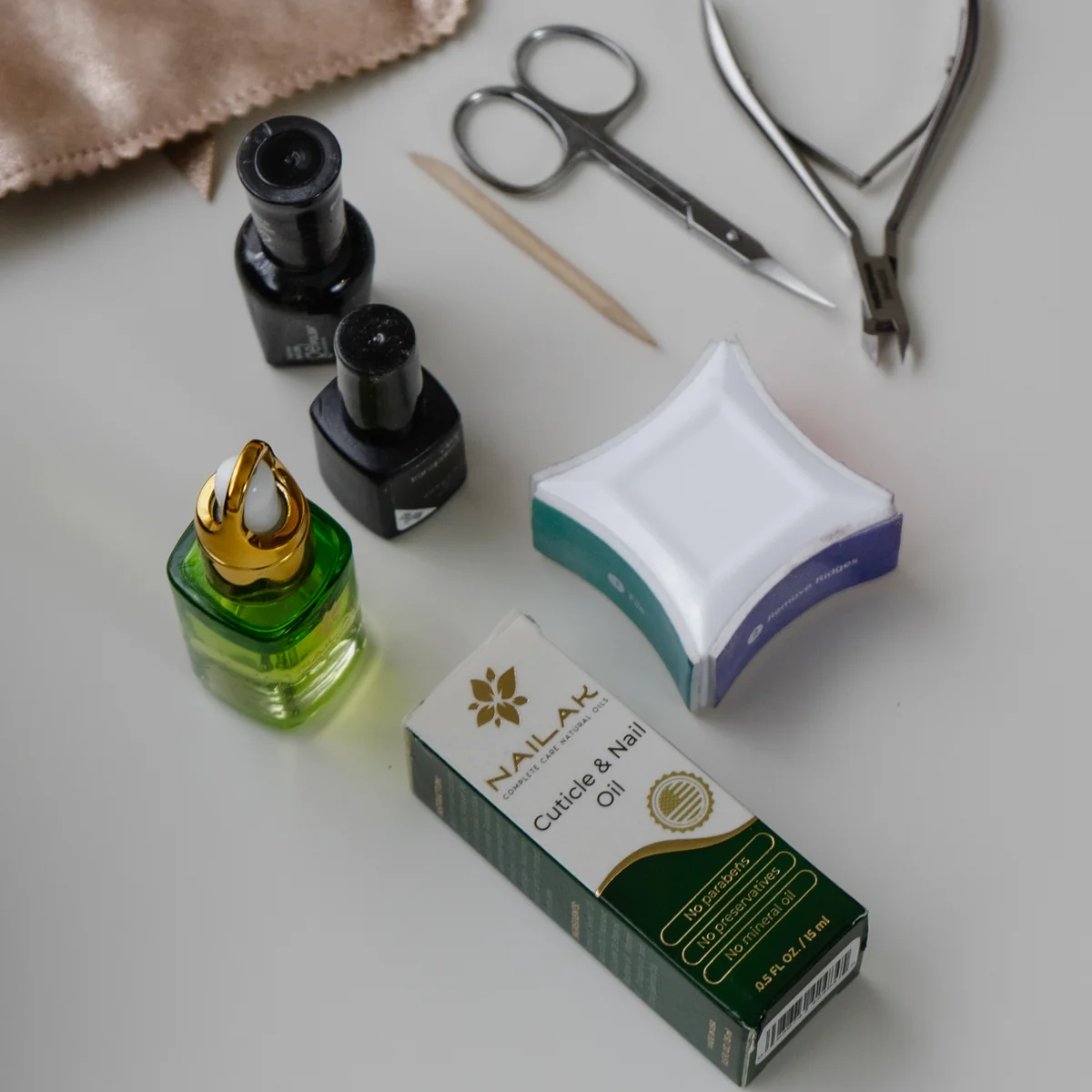
Quick Summary: Vegan nail oil for cuticles uses plant-based oils and antioxidants to hydrate, protect, and strengthen nails with a simple, soothing daily ritual.
Why vegan nail oil for cuticles matters
Your cuticles are a living part of your nail’s defense system. They act like a gasket, sealing in moisture and keeping out bacteria. When they’re dry or inflamed, that seal weakens. Enter vegan nail oil for cuticles — a blend of botanical oils and vitamins designed to mimic your skin’s natural lipids, restore suppleness, and support growth at the source.
What it does:
- Replenishes lipids lost from frequent washing, sanitizer, and weather.
- Softens cuticle tissue so it lies flat instead of fraying.
- Reduces micro-tears, hangnails, and irritation.
- Improves nail flexibility to prevent splits and peeling.
- Enhances shine without polish for a healthy, “bare but cared-for” look.
Why vegan?
- No animal-derived ingredients like beeswax, lanolin, keratin, or shellac.
- Typically leans into cold-pressed, biodegradable, and sustainably sourced oils.
- Often lighter, faster-absorbing textures that layer under hand cream.
The result is a quiet but powerful change: nails that grow in smoother, cuticles that need less clipping, and hands that feel comfortable and cared for.
The plant-powered ingredients to look for
Think of your vegan nail oil for cuticles as a bouquet of targeted botanicals. Each oil brings its own benefits and texture. Choosing well is about pairing your skin’s needs with the right plant profile.
Jojoba oil (Simmondsia Chinensis)
- Skin-identical wax ester; mimics natural sebum.
- Fast-absorbing, non-greasy, excellent daily base.
- Great for all skin types, including sensitive.
Squalane (plant-derived, often from olives or sugarcane)
- Lightweight, stable, and deeply softening.
- Helps lock in moisture without heaviness.
- Ideal for daytime use and for anyone who dislikes oily residue.
Sweet almond oil (Prunus Amygdalus Dulcis)
- Rich in fatty acids; helps soften stubborn cuticles.
- Provides glide for massage.
- Note: patch test if you have nut sensitivities.
Hemp seed oil (Cannabis Sativa Seed Oil)
- Balanced omega profile to reduce dryness and flaking.
- Calms the look of irritation.
- Medium-weight, great for nighttime repair.
Grapeseed oil (Vitis Vinifera)
- Lightweight and antioxidant-rich.
- Helps reduce the look of dullness.
- Excellent in travel-friendly pens for on-the-go use.
Evening primrose oil (Oenothera Biennis)
- Known for gamma-linolenic acid (GLA) to support dry, fragile skin.
- Best as a booster in blends rather than a standalone.
Vitamin E (mixed tocopherols)
- Antioxidant support for nail plate and surrounding skin.
- Helps stabilize other oils in the formula.
Calendula extract
- Soothing; ideal if your cuticles get inflamed from sanitizers.
- Often paired with chamomile for added calm.
Ingredients many vegans prefer to avoid:
- Beeswax and cera alba (animal-derived occlusive).
- Lanolin (from sheep’s wool).
- Keratin or silk protein (often animal-derived).
- Shellac (resin secreted by the lac bug).
Texture notes:
- For daytime, look for a jojoba+squalane base.
- For nighttime, a richer blend with hemp seed or evening primrose wraps the skin in extra comfort.
- If you wear gel or acrylics, lighter oils help nourish without lifting.
How to use cuticle oil like a pro
A little technique goes a long way. Here’s the simple, effective way to maximize every drop.
Daily routine (60 seconds):
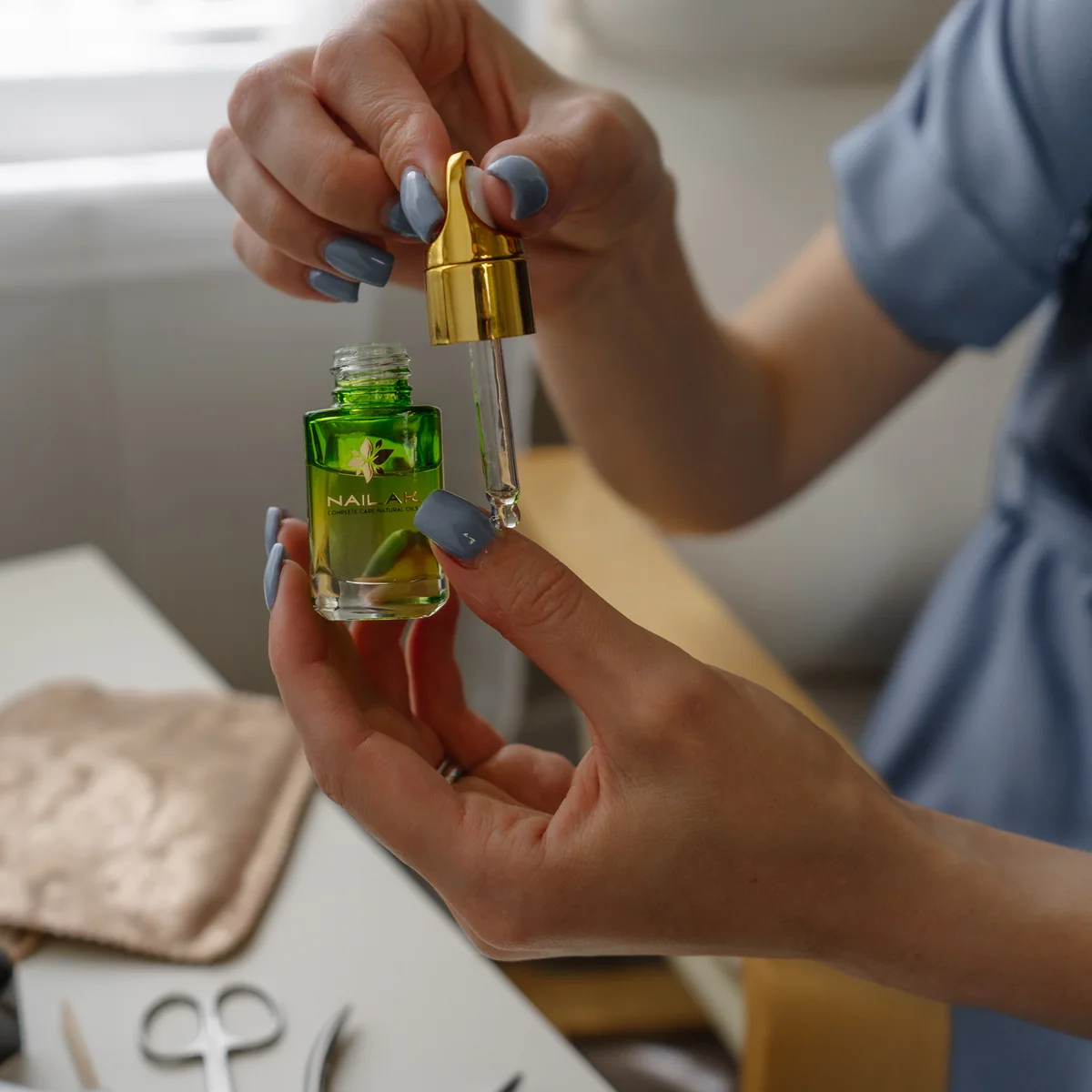
- Apply a tiny bead of vegan nail oil for cuticles to each nail after washing or before bed.
- Use the pad of your thumb to press and glide the oil around the eponychium (the visible cuticle), the sidewalls, and under the free edge if nails are long.
- Massage in small circles for 10–15 seconds per nail to boost circulation.
- Seal with hand cream if desired — oil first, cream second.
Weekly reset:
- After a shower, apply oil generously.
- Gently push back softened cuticles with a wooden stick. Do not cut live cuticle.
- Buff only the nail surface that’s rough; avoid over-buffing.
- Finish with another thin layer of oil and let it absorb before any polish.
Polish and enhancements:
- Before applying polish or gels, cleanse nails with remover and ensure they’re completely oil-free.
- After gel polish is fully cured, massage oil into the surrounding skin to maintain flexibility.
- With acrylics or gel extensions, focus on the skin and new growth area; avoid saturating under the enhancement edge to prevent lifting.
Pro application cues:
- Keep a travel pen in your bag, desk drawer, or nightstand.
- Warm the bottle in your hands for a few seconds for faster absorption.
- For very dry cuticles, slip on thin cotton gloves after application at night.
Choosing the right formula for you
We all have different skin, habits, and scent preferences. Match your vegan nail oil for cuticles to your lifestyle for results you can feel and keep.
By skin type:
- Sensitive: Choose fragrance-free, jojoba-heavy blends with vitamin E. Skip essential oils.
- Very dry: Look for hemp seed or evening primrose in the first five ingredients; layer under a ceramide-rich hand cream.
- Oily skin or humid climate: Squalane-forward formulas absorb quickly and won’t feel slick.
By scent:
- Fragrance-free is best for reactive skin or if you work with clients.
- Naturally scented with essential oils? Keep total essential oil concentration low (generally under 1%) and patch test.
By packaging:
- Dropper bottles: precise, great for nighttime rituals.
- Brush or rollerball: easy control, but clean the tip regularly.
- Click-pen: travel-friendly; perfect for consistent, tiny doses throughout the day.
By values:
- Look for “vegan” and “cruelty-free” on the label.
- Prefer cold-pressed oils when possible for potency.
- Recyclable or refillable packaging supports a lower-waste routine.
Shelf life and storage:
- Store away from heat and sunlight to preserve antioxidants.
- Most oils stay fresh for 6–12 months after opening, depending on the blend.
- If scent changes or oil becomes cloudy, it may be time to replace.
Daily rituals that boost nail health
Cuticle oil works best as part of a thoughtful, low-effort routine. Small changes compound into noticeable results.
Five actionable tips:
- Oil every night for two weeks, then maintain daily or as needed.
- After washing hands, pat dry and apply one drop per hand while skin is still slightly damp.
- Avoid picking: carry a mini nail file to smooth snags immediately.
- Wear gloves for dishwashing and cleaning to minimize water logging.
- Schedule a “hand stretch”: roll your wrists, flex fingers, then massage oil — tension melts, absorption improves.
Seasonal adjustments:
- Winter: Boost frequency to 2–3 times daily; pair oil with thicker hand cream at night.
- Summer: Use lighter oils during the day; reapply after sun exposure and swimming.
- Travel: Cabin air is drying — keep a pen in your carry-on and reapply mid-flight.
Nutrition notes (gentle guidance):
- Hydrate consistently; nails reflect systemic dryness.
- Prioritize protein and a rainbow of plants for micronutrients.
- Consider foods rich in biotin (sweet potatoes, nuts, seeds) and omega-3s (chia, flax). Always consult a professional if considering supplements.
Mindful maintenance:
- If a hangnail forms, soften with oil, then trim the dead skin only.
- Resist cutting living cuticle — it protects new nail growth.
- If inflamed or painful, pause aggressive grooming and focus on barrier repair with oil and an unscented cream.
Trend notes from beauty to nails
There’s a larger texture story happening across beauty: dewy, cushiony finishes are in, and oils are a big part of that shift. Even in makeup, liquid formulas are having a moment — liquid blush, for example, is trending for its seamless glow and blendability, helping skin look naturally lit from within. That same sensibility translates to hands — a light veil of vegan nail oil for cuticles gives a healthy sheen without heaviness, a small “glow” that signals care. (source: https://janeiredale.com/blogs/makeup-blog/liquid-blush-vs-powder-blush)
A gentle DIY blend you can trust
If you’re a formulator at heart, crafting a simple, elegant vegan nail oil for cuticles can be a soothing weekend project. Keep it minimalist and skin-friendly.
Base recipe (30 ml):
- 15 ml jojoba oil
- 10 ml squalane (olive- or sugarcane-derived)
- 4 ml grapeseed oil
- 1 ml vitamin E (mixed tocopherols)
Optional scents (choose one; total essential oils under 0.5 ml per 30 ml):
- 0.3 ml lavender for calm
- 0.3 ml sweet orange for a soft, sunny lift
- 0.2 ml rosemary for a clean herbal note
Instructions:
- Add oils to a clean, dry amber bottle.
- Swirl gently to combine; avoid vigorous shaking.
- Label with date; store away from direct light and heat.
- Patch test before full use, especially if sensitive.
No essential oils? Beautiful. Fragrance-free blends are often the most forgiving, especially if you use your oil multiple times per day.
Myths, truths, and smart habits
Let’s clear a few common misunderstandings so your routine stays smooth.
Myth: Cuticle oil makes polish chip faster.
- Truth: When applied after polish has fully dried or gel has cured, oil actually reduces micro-cracking by keeping the nail flexible.
Myth: You must cut cuticles for clean manicures.
- Truth: Softening with vegan nail oil for cuticles and gently pushing back maintains a healthy seal and looks neat, without compromising protection.
Myth: “Vegan” means “natural” and always gentle.
- Truth: Vegan speaks to the absence of animal-derived ingredients; always check for fragrance, essential oils, or potential irritants if you have sensitive skin.
Myth: One application a week is enough.
- Truth: Daily use delivers results. Micro-doses throughout the day keep the barrier resilient.
Gentle technique refresher:
- Dot, don’t drench — a tiny amount spreads far.
- Massage around the nail folds, not just on top.
- Breathe while you do it; let the ritual slow your pace.
Reflecting on confidence, care, and small rituals
We think of confidence as loud — but it’s also quiet. It’s the tender routine that turns fragile into resilient, the tiny shine at the edge of a nail that only you notice. Vegan nail oil for cuticles is an unassuming companion in that process, protecting what’s new and nourishing what’s already grown. It reminds you that care can be both graceful and practical, that beauty is not a performance but a relationship.
In a world that asks for so much, this is one thing that gives back every time you reach for it. A drop. A breath. A softer edge to the day. Hands ready to hold what matters.
Frequently Asked Questions (FAQ)
Q: How often should I apply vegan nail oil for cuticles? A: Daily is ideal. For very dry cuticles, apply morning and night for two weeks, then maintain once daily. Reapply after frequent handwashing.
Q: Will cuticle oil affect gel or acrylic enhancements? A: Apply oil after gel is fully cured or acrylic is set, focusing on the skin and new growth area. Avoid saturating under the enhancement edge; keep the nail plate oil-free before any new application.
Q: Which ingredients make a cuticle oil truly vegan? A: It excludes animal-derived ingredients like beeswax, lanolin, keratin, silk, and shellac. Plant oils (jojoba, squalane, hemp seed) and synthetic vitamin E are vegan-friendly choices.
Q: Can I make my own vegan nail oil at home? A: Yes. A simple blend of jojoba, plant-derived squalane, grapeseed, and vitamin E offers balanced hydration. Keep essential oils minimal or skip them if you’re sensitive.
Q: Does cuticle oil help nails grow faster? A: It supports healthier growth by maintaining a flexible, hydrated environment for the nail matrix. You’ll likely see fewer breaks and smoother tips — the kind of progress that looks like “faster” growth because you’re not losing length to damage.
Estimated word count: 1960