
Vegan Antifungal Nail Care: Calm, Clean, Effective
The kettle clicked off and the bathroom mirror still wore a veil of steam. You swipe a towel over your face and notice it: a pale-yellow edge along your big toenail where the polish had chipped. It isn’t dramatic. It’s the kind of change you’d miss on a busy week. But the look sticks with you when you slip into soft socks for your morning walk.
When you get home, you take your nails bare for the first time in months. Your toes feel strangely shy. They’ve been living under bold reds and creamy nudes, dancing through barre classes, tucked into sweaty sneakers, then snug slippers. The seasons changed and so did your routines, but your nails didn’t get the memo.
You line up what you have: a glass file, a cuticle stick, a little bottle of tea tree, a gentle cleanser, your favorite hand cream. The bathroom smells like eucalyptus and clean laundry. You breathe in. Let’s be honest: nothing throws off your confidence like nails that feel “off.” But shame doesn’t help; compassion does. You choose calm over panic. You choose care over cover-up.
The idea forms as you massage oil into your cuticles: a vegan antifungal nail care routine, simple and kind. No harsh, animal-derived additives. No complicated steps. Just consistent, plant-forward support that respects your body and your values.
You trim carefully. You buff lightly. You pat your feet dry and let each toe feel air. You can almost sense your nervous system settling, like a quiet nod from your future self. Because this isn’t only about a nail. It’s about paying attention to what needs attention. About taking responsibility without judgment. And about the small, daily rituals that add up to a self you trust—one that looks down at her bare nails and thinks, “I’ve got this.”

Quick Summary: A practical, vegan antifungal nail care guide to help you manage early concerns, choose effective plant-based ingredients, and build a calm routine that supports healthy nails with compassion and consistency.
Why vegan antifungal nail care matters
Your nails do more than look pretty. They protect, anchor, and speak quietly about your overall habits. When you notice dullness, thickening, off-white discoloration, or brittle edges, it can signal fungal overgrowth or a stressed nail environment.
Choosing vegan antifungal nail care is about two things:
- Efficacy rooted in nature.
- Values-driven choices that are kinder to animals and often gentler for skin.
Vegan options avoid animal by-products like lanolin or certain keratins. They lean on plant actives and barrier-supporting oils. For many, that means fewer potential irritants and a routine that feels clean and aligned.
There’s also a mindset shift here. Vegan antifungal care encourages consistency. These are not one-and-done fixes. Fungal issues are often slow, stubborn, and opportunistic. They love moist, tight spaces. They thrive when we ignore them and paint over them. Vegan care asks you to check in daily, keep things dry, and apply targeted support. It’s methodical in the best way.
Let’s be clear: if you suspect a serious infection, a healthcare professional is your next step. Still, many early changes respond well to improved hygiene, honest rest from polish, and thoughtful plant-based actives that discourage fungal growth and support a stronger nail environment.
You’re not trying to fight your nails into submission. You’re creating conditions where they can recover and stay resilient.
Spotting early signs (and what’s not fungus)
Early is easier. Catching small shifts early often means gentler care and faster results.
Common early signs:
- Subtle yellow or off-white staining.
- Slight thickening or crumbly edges.
- A mild change in texture or sheen.
- A stale or “locker-room” odor from sweaty shoes.
What can mimic fungus:
- Nail trauma from tight shoes or running.
- Polish stains (especially from dark colors without a base coat).
- Peeling from acetone or aggressive buffing.
- Psoriasis or eczema-related nail changes.
Helpful checks:
- Press the nail gently. Does it hurt? Trauma often does.
- Think back two weeks. New dark polish? New shoes?
- Smell test. Persistent odor suggests a microbial party.
- Clean break? That could be mechanical, not microbial.
If the nail is lifting from the bed, very thick, painful, or rapidly changing, get a professional opinion. A clinician can distinguish fungus from other conditions and advise on next steps. Vegan daily care still helps with hygiene and comfort alongside any prescribed plan.
Ingredient guide: plant-based and purposeful
Let’s decode vegan antifungal nail care. You want ingredients that discourage fungi, soothe the surrounding skin, and support a sturdy moisture barrier.
Plant-powered antifungal allies
Tea tree oil (Melaleuca alternifolia)
- Known for broad antimicrobial action. Choose low, skin-friendly dilutions (1–2%) in a carrier oil.
- Tip: Patch test. Tea tree can irritate if used neat or too strong.
Undecylenic acid (from castor oil)
- A well-known antifungal fatty acid, often found in vegan formulas.
- Look for 10–25% in serums or solutions designed for nails.
Caprylic/capric triglyceride (from coconut)
- Not an antifungal by itself, but a superb carrier that helps spread actives and keep them stable.
- Can support a less hospitable environment for overgrowth when paired with antifungal actives.
Oregano leaf extract (carvacrol-rich), clove, or thymol
- Potent botanicals. Effective in low concentrations.
- Always diluted; these can be intense and drying undiluted.
Aloe vera and witch hazel (alcohol-free)
- Calm redness and support comfort while you treat.
- Witch hazel is mildly astringent; opt for alcohol-free versions to avoid over-drying.
Soothers and barrier builders
Jojoba oil
- Mimics skin’s natural sebum. Helps carry actives and prevent brittleness.
Squalane (plant-derived)
- Lightweight. Reduces transepidermal water loss without feeling greasy.
Urea (vegan-sourced)
- Gently softens thickened nail plates and surrounding skin.
- Look for 10–20% for daily smoothing; higher strengths for targeted calluses.
Glycerin and panthenol (vitamin B5)
- Humectants that keep nails flexible—important, because brittle nails crack and invite microbes.
Zinc PCA or copper peptides (vegan formulations)
- Help odor control and support the skin barrier around the nail.
Label tips:
- Look for “vegan,” “cruelty-free,” and “fragrance-free” if you’re sensitive.
- Avoid harsh solvents or high alcohol content that can desiccate nails.
- Essential oils should be listed low on the ingredient deck and within safe dilution.
Here’s the secret: less is more. Pick one antifungal active and pair it with soothing carriers. Consistency matters more than a crowded shelf.
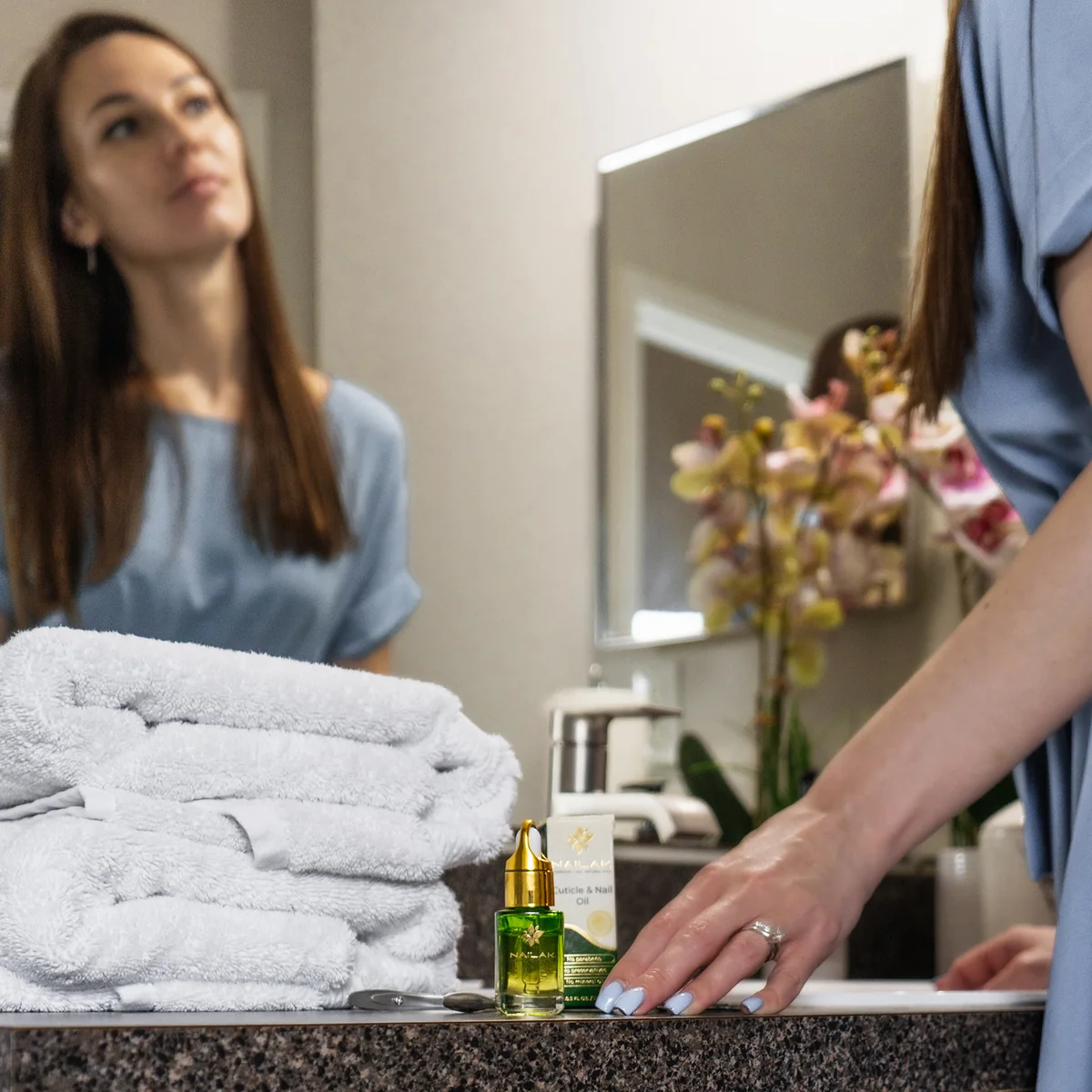
A daily routine that fits real life
You need something doable on a Tuesday at 9 p.m., not a spa day once a quarter. This vegan antifungal nail care routine takes minutes.
Morning
- Rinse and dry
- After your shower, dry between toes thoroughly.
- Use a clean towel corner. Moisture is the fungi’s welcome mat.
- Apply your antifungal
- Use a vegan serum with tea tree or undecylenic acid.
- Brush a thin layer over the nail, cuticle line, and side walls.
- Let it sink for 60–90 seconds.
- Lock in comfort
- Massage a drop of squalane or jojoba around the nail.
- This reduces micro-cracks and keeps the area flexible.
- Footwear check
- Choose breathable shoes and moisture-wicking socks.
- If you commute in sneakers, pack a spare dry pair.
Evening
- Clean slate
- Wash feet and hands with gentle, fragrance-free cleanser.
- Pat dry. No rubbing; friction irritates.
- Exfoliate softly (3–4 nights/week)
- Apply 10–20% urea cream to thick areas and nail edges.
- This helps actives penetrate without sandpapering your nails.
- Second antifungal pass
- Brush on your vegan antifungal serum again.
- Allow it to dry completely before bed.
- Buffer barrier
- Seal with a thin layer of jojoba around the nail folds.
- Put on clean, breathable sleep socks if your feet get cold.
Weekly reset
- Trim nails straight across; avoid rounding corners.
- Use a glass file to smooth edges. No aggressive buffing.
- Give nails at least one polish-free week each month.
- Disinfect tools with isopropyl alcohol and let them air-dry.
Actionable tips to make it stick:
- Keep your serum next to your toothbrush. Habit stacks win.
- Set a 60-second drying timer. Tiny rituals build consistency.
- Rotate two pairs of sneakers. Let yesterday’s pair fully air out.
- Carry spare socks in your work bag or gym tote.
Hygiene, shoes, and the spaces in between
Healthy nails start with a healthy environment. Think beyond the bottle.
Socks and shoes
- Choose bamboo, merino, or technical blends that wick moisture.
- Change socks after workouts or long days.
- Avoid tight toe boxes; friction and pressure weaken nails.
Shower and floors
- Rinse and dry feet last, then step onto a clean towel.
- Use flip-flops in communal spaces like gym showers.
Nail tools and polish
- Keep your tools personal. No sharing, even with friends.
- If you use polish, pick breathable, vegan formulas and always wear a base coat.
- Give nails regular breaks from color.
Manicures and pedicures
- Communicate your vegan and hygiene preferences at salons.
- Ask about sterilization practices. It’s your health; it’s fair to ask.
- Consider bringing your own tools if that eases your mind.
Sweat and schedules
- After workouts, wash and fully dry feet before putting on street shoes.
- Sprinkle a vegan, talc-free powder into shoes if you run hot.
Small pleasures help routines stick. Around the holidays, many of us anchor self-care to cozy sensory cues—like lighting a favorite seasonal candle before a slow evening routine. A recent round-up noted how indulging in a special candle can transform mood and nudge you into a comforting ritual you’ll actually keep. Tiny luxuries can be the scaffolding for consistency. (source: https://reallyree.com/best-christmas-candles/)
What to expect and when to see a pro
Patience is part of the plan. Nails grow slowly:
- Fingernails: about 3–4 millimeters per month.
- Toenails: about 1–2 millimeters per month.
Mild issues can look better in 4–8 weeks, but full clearing may take several growth cycles. Your job is to create conditions that favor health: dryness, cleanliness, and targeted vegan actives.
Signs you’re on track:
- New growth near the cuticle looks clear and smooth.
- Less flaking or crumbly edges.
- Odor improves and nails feel stronger.
When to seek professional help:
- Pain, swelling, or pus around the nail.
- The nail lifts, splits deeply, or thickens rapidly.
- Diabetes, circulatory issues, or immunosuppression.
- No improvement after 8–12 weeks of diligent care.
A clinician can recommend lab testing, prescribe treatments if needed, and help you keep some lifestyle measures in place. Your vegan antifungal nail care habits still matter before, during, and after medical support.
Gentle rituals that grow confidence
There’s a quiet dignity in caring for the parts of you no one else notices. Vegan antifungal nail care is both practical and tender. It’s the minute you take to dry between your toes. The kindness of pausing before another coat of polish. The choice to nurture instead of hide.
Let your routine be a daily vote for yourself. Not just for clear nails, but for the feeling that your body can rely on you. The way your shoulders drop when your habits match your values. That’s beauty too—the kind that glows through bare nails, soft socks, and the simple confidence of “I take care of me.”
Frequently Asked Questions (FAQ)
Q: What makes vegan antifungal nail care different? A: Vegan care avoids animal-derived ingredients and focuses on plant actives and gentle carriers. You still get effective antifungal support, but in formulas that align with cruelty-free values and often reduce irritation.
Q: How often should I apply a vegan antifungal serum? A: Twice daily is a practical target for most people. Morning and evening applications keep a steady presence of actives on the nail and surrounding skin without overloading the area.
Q: Can tea tree oil alone fix nail fungus? A: Tea tree oil can help manage early concerns when properly diluted and used consistently. It’s not a guaranteed cure. Combine it with good hygiene, dryness, and, if needed, professional guidance for best results.
Q: Should I stop wearing nail polish during treatment? A: Give your nails regular polish-free breaks, especially at the start of care. If you wear color, choose breathable, vegan polishes and a base coat. Remove polish gently and watch for staining that can mask changes.
Q: How do I keep shoes from reintroducing fungus? A: Rotate pairs to let them fully dry, use moisture-wicking socks, and consider a vegan, talc-free powder. Wipe the inside of shoes with alcohol-based wipes occasionally and replace insoles if they stay damp or hold odor.
Estimated word count: 1,975