
Cuticle Oil for Acrylic Nails: Expert Guide & Rituals
The elevator doors slide open and the air smells like winter—dry, crisp, a little electric. You tug your scarf free and notice a tiny snag in the yarn. Your acrylic nails look flawless, but your cuticles tell another story. They’re a little tight, a little gray at the edges, like they’ve weathered three meetings too many. You rub your thumb over your ring finger and feel that whisper of roughness. It’s small. But it’s not nothing.
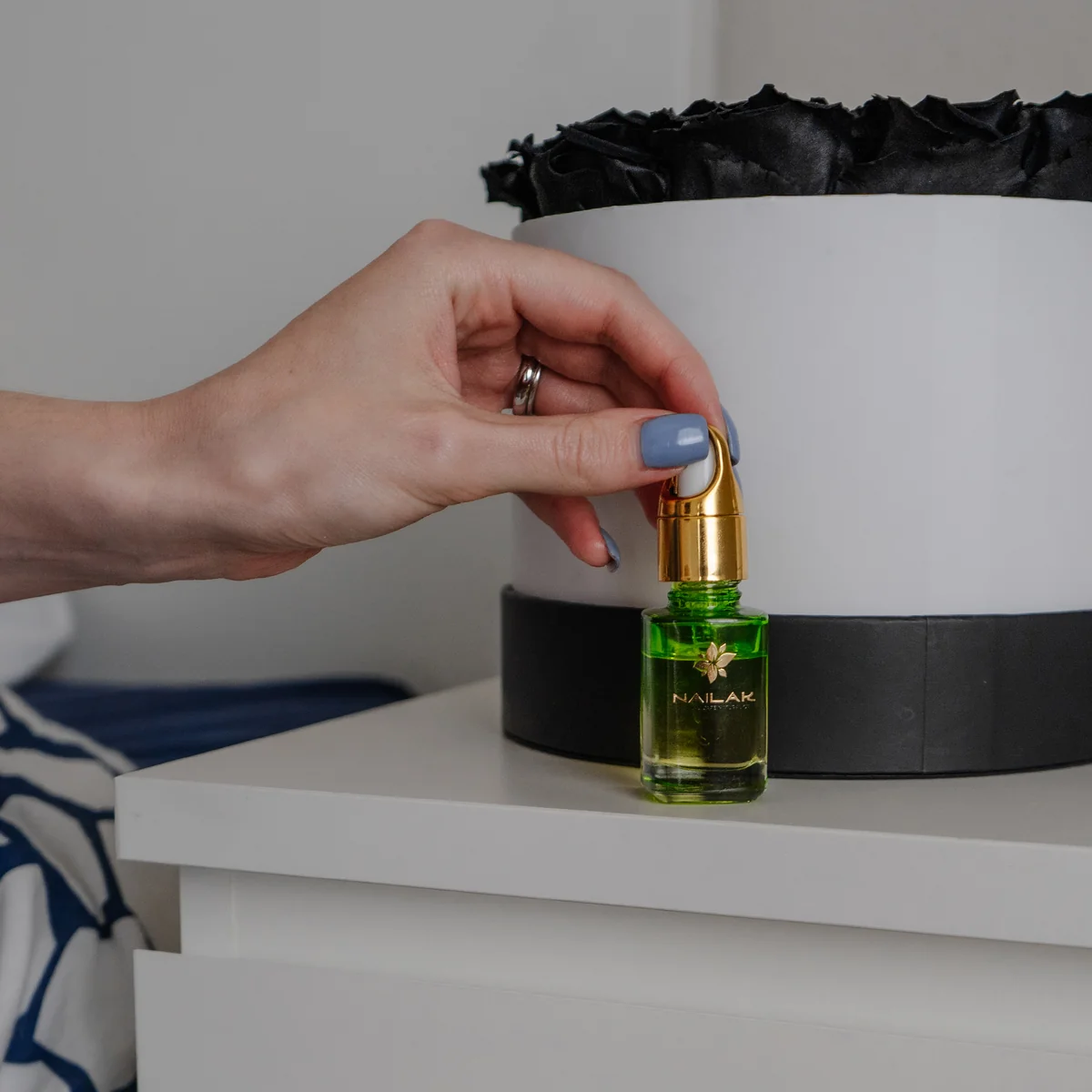
Back home, the light in the kitchen is soft and golden. You set your bag down, exhale, and reach for the slim glass bottle that lives beside the coffee machine. Your cuticle oil. You twist the cap, and the brush releases that first glossy bead. It glides around the curve of each nail, pooling at the base, catching the light like dew on a leaf. You work it in with tiny circles. Your hands warm. The skin softens almost instantly. You can almost feel the tension leaving through your fingertips.
The day starts to fade. The world gets quieter. Your nails look like they’ve just stepped out of the salon. Your acrylics gleam, but what really changes is the feeling. Nothing pulls. Nothing scratches. The skin looks supple again, the nail edges smoother, the surface brighter. It’s a small ritual, yes. But it’s the kind of small that changes everything.
Let’s be honest: acrylic nails are a confidence piece. They’re our handshake, our punctuation, our tiny bit of armor. But armor needs conditioning. That’s where cuticle oil shines. It’s not a luxury for acrylic wearers. It’s maintenance. It’s protection. It’s your daily insurance policy against dryness, lifting, and premature fills.
Tonight, you do one more sweep around each nail. Then you cup your mug with both hands. Warmth. Calm. Ten little mirror-bright crescents catching the last of the light. You didn’t fix the whole week. But you did take back five honest minutes. And your nails will thank you for it tomorrow.

Quick Summary: Cuticle oil for acrylic nails keeps skin supple, prevents lifting, boosts shine, and prolongs your set with a simple daily ritual.
Why cuticle oil matters with acrylics
Acrylics are durable, beautiful, and transformative. They also demand balance.
During application, the nail plate is prepped to anchor the acrylic. That prep plus daily handwashing can strip natural oils. The cuticle area and the eponychium (the living skin at the base) get dehydrated first. When that skin tightens, it can pull at the acrylic edge. That stress can lead to micro-lifting and ragged hangnails.
Cuticle oil steps in as a flexible buffer. The right oil mimics the skin’s natural lipids. It restores slip to the surface. Hydrated skin hugs the acrylic instead of fighting it. Your set looks fresher, longer.
There’s a cosmetic win too. Oil refracts light. A thin coat makes acrylics appear more glassy. It sets off the color, the shape, and the design you paid for. It’s a quick lift, like lip balm for your hands.
There’s also a biological benefit. Soft, nourished cuticles make a healthier barrier. That barrier protects the nail matrix below, where new growth happens. When the boundary stays intact, you’re less likely to peel, pick, or inflame the area.
Daily oiling means fewer snags. Fewer cracks. Less stress on the bond. More time between fills.
How cuticle oil protects acrylic sets
Think of cuticle oil as a conditioner for your nails and surrounding skin. It doesn’t weaken acrylic; it supports what keeps the acrylic in place.
Here’s the secret: flexibility is stability. Acrylic is hard. Your skin is not. Oil helps the skin flex without tearing or drying. It reduces friction at the cuticle edge where lifting starts. And it nourishes the thin skin that guards your nail matrix.
What it does, exactly:
- Replenishes skin lipids stripped by soap and sanitizer.
- Softens cuticles to prevent hangnails and frays.
- Adds slip to reduce micro-traction that nudges acrylic edges.
- Visually boosts shine and smooths the finish.
- Supports healthy new nail growth under your set.
When to apply:
- Morning: After washing hands, before hand cream.
- Midday: If hands feel tight or after sanitizer.
- Night: A generous coat before bed for deep overnight conditioning.
Small daily habits prevent big repair jobs later. Two minutes a day can save two weeks of wear.
Choosing the right cuticle oil
Not all oils are equal, especially with acrylic nails. Look for formulas that absorb quickly, mimic the skin’s natural lipids, and include barrier-strengthening antioxidants.
Carrier oils that perform
- Jojoba oil: A wax ester that closely mimics skin sebum. Excellent absorption. Helps prevent transepidermal water loss.
- Squalane: Lightweight and non-greasy. Leaves a silky slip without residue. Great for frequent use.
- Sweet almond oil: Gentle, cushiony, and soothing for sensitive skin.
- Grapeseed oil: Thin, fast-absorbing, and rich in linoleic acid for barrier support.
- Marula or meadowfoam seed oil: Adds glow and lasting moisture without a heavy feel.
Smart boosters to include
- Vitamin E (tocopherol): Antioxidant that supports skin recovery and protects oils from oxidizing.
- Bisabolol or chamomile extract: Calms irritation around the eponychium.
- Ceramide-infused blends: Help reinforce a fragile barrier over time.
Fragrance and essentials
- If you love scent, choose low-allergen fragrance or naturally derived aromatics in tiny amounts.
- Avoid undiluted essential oils. Citrus and mint can be sensitizing near delicate cuticles.
- If you have sensitive skin, go fragrance-free.
Packaging and texture
- Pens are great for desks, cars, and travel. They limit mess and target the cuticle line.
- Droppers deliver the most product for nighttime routines.
- Rollerballs are soothing but can overapply. Use a light touch.
Pro tip: If you see separation or clouding, check the ingredient list and expiration date. Fresh oil works better, smells better, and feels better.
In skin care, plant-based hydrators keep trending. Aloe vera, for instance, is widely used to soothe irritation and support recovery from stressors like acne and minor burns. While aloe is water-based, it pairs well with cuticle oil: apply an aloe-rich hand serum first, then seal with oil to lock moisture in. It’s a gentle, layered approach to comfort dry hands around acrylics (source: https://homeremediesforbeauty.com/7-amazing-benefits-of-aloe-vera-for-skin/).
Application routine for salon and home
Technique is everything. A minute of mindful application beats a quick swipe.
At the salon:
- After your acrylics are shaped and finished, ask your tech to cleanse the nails of dust.
- Apply a small bead of cuticle oil at the base and sidewalls.
- Massage for 30–60 seconds to increase circulation and soften the edges.
- Finish with hand cream on the backs of hands. Keep the palm side light if you’re driving.
At home:
- Morning:
- Wash or rinse hands. Pat dry.
- Dot oil along the cuticle line and sidewalls.
- Massage in small circles. Work any extra across the nail surface.
- Add a light hand cream if needed, focusing on the backs of hands.
- Midday:
- Keep a pen in your bag or at your desk. Use after sanitizer.
- One click per hand is usually enough.
- Night:
- Apply a richer layer and take your time with massage.
- Slip on cotton gloves for 10 minutes if you want a spa moment.
Massage matters. It warms the oil, encourages absorption, and brings blood flow to the matrix. That circulation supports stronger growth, which supports a better bond for your next fill.
Layering order:
- Water-based serums or lotions first.
- Oil second to seal.
- Balms last, if needed, over knuckles or cracked spots.
Avoid oil on the underside of the acrylic tip. Focus on skin and the natural nail area only.
Ingredients to love and avoid
Choosing wisely protects both your skin and your set.
Ingredients to love:
- Jojoba oil: Biocompatible, fast-absorbing, non-greasy.
- Squalane: Silky, featherlight, ideal for frequent reapplication.
- Grapeseed oil: Supports barrier function without heaviness.
- Vitamin E: Antioxidant shield for skin and oil stability.
- Bisabolol: Calms redness and soothes post-filing sensitivity.
- Evening primrose oil: Rich in gamma-linolenic acid for resilience.
Ingredients to use with caution:
- Strong fragrance or essential oils: Can irritate thin cuticle skin.
- High ethanol content: Dries out the area you’re trying to nourish.
- Thick mineral greases: Not harmful to acrylic, but too occlusive for daytime use and may feel sticky.
- Undiluted tea tree or citrus oils: Potentially sensitizing; use only in well-formulated blends.
Acetone and pure solvent removers shouldn’t be part of your daily routine. Save them for professional removal. If you must use a polish remover at home, shield your skin with oil afterward.
Troubleshooting common acrylic issues
Acrylics are tough, but little issues add up. Use cuticle oil strategically to keep everything calm and glossy.
Problem: Dry, tight cuticles
- What’s happening: Over-washing and cool weather strip natural lipids.
- Oil fix: Apply morning and night with jojoba or squalane. Add a weekly overnight “mask” with a thicker layer.
Problem: Lifting near the cuticle
- What’s happening: Dehydrated skin pulls away, nudging the acrylic edge.
- Oil fix: Keep the cuticle area soft. Massage oil along the sidewalls to reduce friction. Do not flood under the enhancement.
Problem: Ragged hangnails
- What’s happening: Micro-tears from dryness and manual tasks.
- Oil fix: Oil daily and gently nudge back the cuticle with a soft pusher after a shower. Never cut living tissue. Snip only the lifted white tag with clean nippers.
Problem: Dull finish a few days post-fill
- What’s happening: Dust, soap residue, and micro-scratches.
- Oil fix: Wipe nails with a soft cloth, then apply a thin film of oil over the surface. Buff with a microfiber towel for instant gloss.
Problem: Itchy or reddened skin at the fold
- What’s happening: Sensitivity to fragrance or sanitizer overload.
- Oil fix: Switch to fragrance-free oil with bisabolol. Increase nighttime use and add a simple hand cream with ceramides.
Life moments that dry hands fast:
- New baby days with constant washing.
- Winter commutes with heated air and wind exposure.
- Gym chalk or frequent sanitizing at work.
- Dishwashing and household cleaners without gloves.
For these seasons, keep oil where you live: one at the sink, one at your desk, one in your bag. Consistency beats perfection.
Build a calming nail-care ritual
Beauty rituals aren’t just about looks. They’re a pause, a breath, and a check-in.
Try this three-minute reset:
- Put your phone in airplane mode.
- Warm a drop of cuticle oil between your fingertips.
- Circle each nail ten times. Slow down on the thumbs.
- Press the pad of your thumb into the palm of your opposite hand. Hold for a slow inhale. Switch sides.
- Finish with a light sweep of oil over the nail surface. Watch the gloss bloom.
Choose a texture and scent that feels like you. Maybe it’s a fragrance-free formula at your desk, and a soft chamomile at night. Pair the ritual with something you already do—tea time, skincare, or journaling. Habit hooks help.
Here’s the gentle truth: your acrylics are an extension of you. When the skin around them is cared for, the whole set looks more expensive, more considered, more you. Cuticle oil for acrylic nails is simple. It’s also powerful. That little bottle says, “I take care of details.” And that kind of care ripples. It steadies your day. It builds confidence. It turns maintenance into a moment of grace.
Frequently Asked Questions (FAQ)
Q: How often should I use cuticle oil for acrylic nails? A: Aim for twice daily. Morning and night are ideal. Add quick midday touch-ups after washing or sanitizer.
Q: Will cuticle oil make my acrylics lift? A: No. Proper use reduces lifting risk by keeping the surrounding skin flexible and healthy. Avoid flooding oil under the enhancement.
Q: Can I use coconut oil as cuticle oil on acrylics? A: In a pinch, yes. But it’s heavier and slower to absorb. Jojoba or squalane feels cleaner and is easier for frequent use.
Q: Does cuticle oil dull the gel topcoat on acrylics? A: It actually boosts shine. Wipe any dust first, then apply a thin layer and buff gently with a soft cloth.
Q: Pen, dropper, or roller—which is best? A: Pens are the most convenient on the go. Droppers are great for nighttime massage. Choose what you’ll use consistently.
Estimated word count: 1940