
Natural Nail Care Routine at Home: A Gentle Guide
It starts on a quiet Sunday afternoon, the kind of soft, in-between hour when sunlight pools on the kitchen table and the kettle clicks off with a tiny sigh. You set your phone to Do Not Disturb, slide the clutter aside, and create a small stage for yourself: a glass bowl of warm water with a slice of lemon, a clean towel, your favorite cuticle oil, a file you trust like an old friend. The house hums again—washer spinning, a neighbor’s laughter somewhere down the hall—but you have carved out a pocket of calm. This moment is yours.
You dip your fingers into the bowl and breathe in the faint citrus. It’s almost ceremonial. The day loosens its shoulders while you soften your cuticles, not hurrying the soak. The warmth surprises you, the way something simple can feel like care without being dramatic. You pat your hands dry, noticing the delicate half-moons at each nail, the way each finger tells a tiny story: the little nicks from opening a package, the faint ridge from a winter spent with too much sanitizer, the spot where you once picked at a gel edge out of habit, not malice.
You are here for a reset. Not a salon escape or an elaborate design session—though there’s a season for both—but a return to your own two hands. A natural nail care routine at home doesn’t promise overnight miracles. It offers something steadier: small, consistent steps that protect your nail plate, feed your cuticles, and honor your daily rhythms. It’s not just about prettier nails. It’s about the gentle authority that comes from tending to what’s yours.
Let’s be honest: we love a quick fix. But healthy, strong, naturally shiny nails rarely come from a sprint; they come from a quiet routine that respects growth cycles and embraces prevention. Tonight, you shape with intention, buff with barely-there pressure, and press in oil like it’s a micro-massage. You notice how your fingers respond, how the skin around your nails softens and looks more like silk than paper.
You’re not just polishing. You’re building a habit that says, I can create calm in a corner of my day. And when you close the oil bottle and flex your hands, you can almost feel the smoothness catch the light. This is the power of a natural nail care routine at home: tiny, tending choices adding up to resilient, graceful hands that carry you through your life.
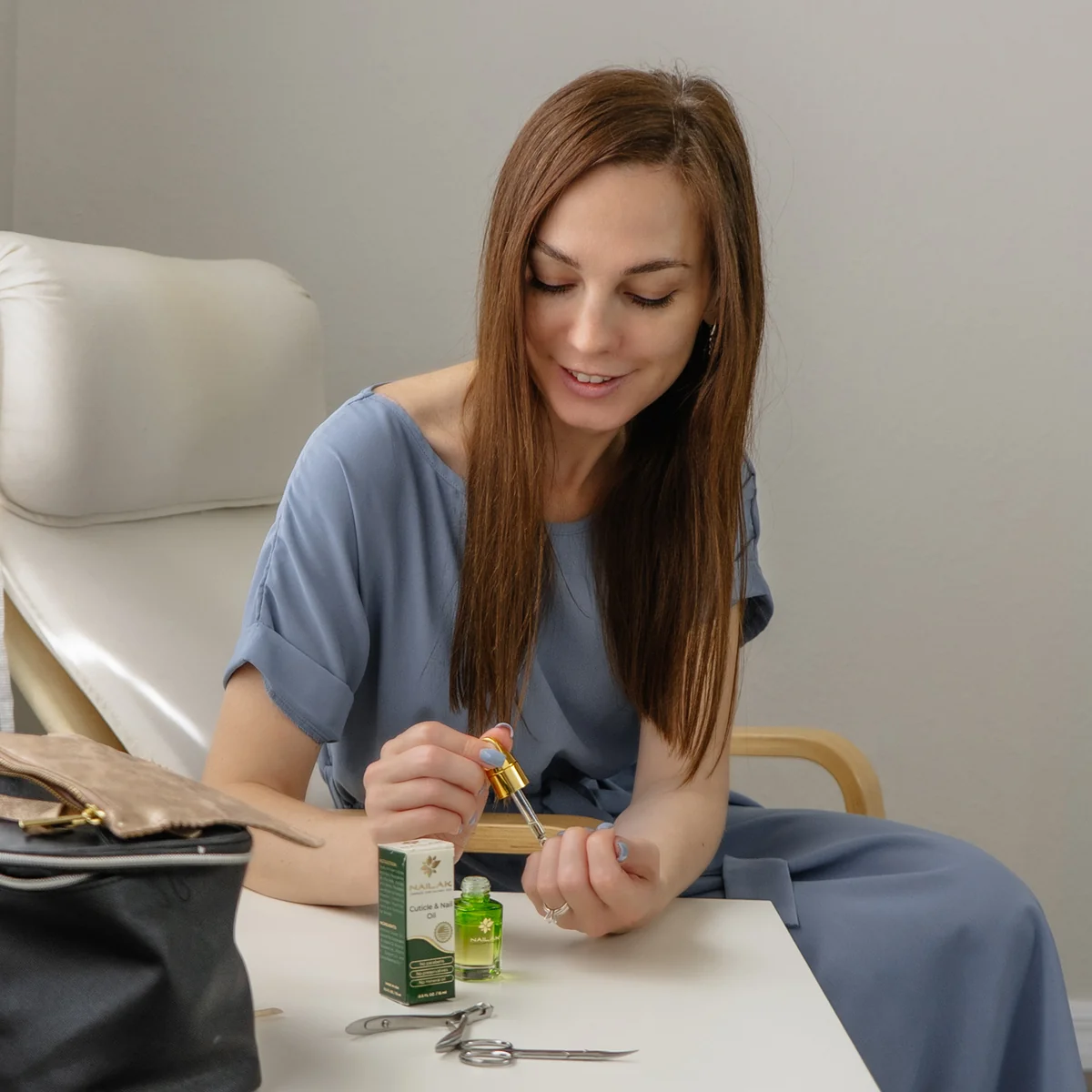
A natural nail care routine at home is a simple, repeatable system—cleanse, shape, nourish, protect—that builds stronger, smoother, more resilient nails over time.
Why natural nail care matters
Your nails are living history. They show stress, hydration habits, and daily wear. A natural approach supports the nail plate and the surrounding skin without the frequent stripping or heavy-duty adhesives that can push nails past their limit.
Key reasons to go natural:
- It respects the nail’s slow growth cycle.
- It strengthens the barrier function of your cuticles.
- It reduces peeling, brittleness, and breakage from overprocessing.
- It brings you into consistent, mindful care instead of boom-and-bust maintenance.
Natural doesn’t mean basic; it means intentional. Less damage, more resilience. More glow from within.
Build your at-home nail toolkit
You don’t need a drawer full of gadgets. Choose fewer, better tools and keep them clean.
The essentials
- Non-acetone remover (for occasional polish) or a gentle acetone with hydrating additives.
- Glass or crystal nail file (fine grit) for smooth, sealed edges.
- Soft buffer (240/320 grit) for subtle shine, used sparingly.
- Cuticle oil with jojoba or squalane; fragrance-free if you’re sensitive.
- Rich hand cream or balm with ceramides or shea butter.
- Mild hand wash (pH-balanced, not stripping).
- Orangewood stick or silicone pusher for gentle cuticle work.
- Clean towel and a small bowl for soaking.
Nice-to-haves
- Nail serum with peptides or amino acids.
- Thin cotton gloves to wear over cream at night.
- A breathable, strengthening base coat (no formaldehyde releasers).
Keep it sanitary
- Wipe tools with isopropyl alcohol after each use.
- Replace files when they dull or chip.
- Never share tools. Your microbiome is personal.
Step-by-step: your weekly routine
This is the backbone of your natural nail care routine at home. Repeat weekly; go slower if your nails are fragile.
1) Soak and soften (3–5 minutes)
- Fill a bowl with warm water. Add a drop of gentle soap or a slice of lemon if you like.
- Soak just long enough to soften cuticles. Avoid pruning your fingertips.
Pat dry. Moisture on the surface helps the next step glide.
2) Shape with care (5 minutes)
- Use a glass file to shape in one direction. Avoid sawing back and forth.
- Choose a shape that mirrors your cuticle curve: soft square or rounded oval.
- Leave a tiny free edge to protect the fingertip.
Tip: File when dry. Wet nails are more prone to splitting.
3) Smooth the surface (1–2 minutes)
- Very lightly buff with a soft buffer to remove snags.
- Aim for a glow, not a glassy shine. Over-buffing thins the nail.
Think of this as dusting, not sanding.
4) Gentle cuticle care (2–4 minutes)
- Apply a cuticle softener or oil. Wait a minute.
- With a silicone pusher or orangewood stick, coax the cuticle back. No force.
- Trim only hangnails. Leave the eponychium intact—it’s your natural seal.
Here’s the secret: healthy cuticles make nails look instantly polished.
5) Nourish and seal (2–3 minutes)
- Massage cuticle oil into the base and sidewalls of each nail.
- Follow with a ceramide-rich hand cream. Massage up to the wrists.
You can stop here for a naked, luminous finish.
6) Optional: breathable color
- If you use polish, wipe nails with remover first to remove oils.
- Apply a breathable base coat, one coat of color, and a quick-dry top coat.
- Rest your hands for 20 minutes. No tasks. No typing. Let the film set.
7) Post-care pause
- Avoid water exposure for at least 30 minutes after polish or oiling.
- Put on cotton gloves for 15 minutes if your hands are very dry.
Weekly rhythm example:
- Sunday: full routine.
- Wednesday: midweek oil, hand mask, tidy edges.
Consistency beats perfection.
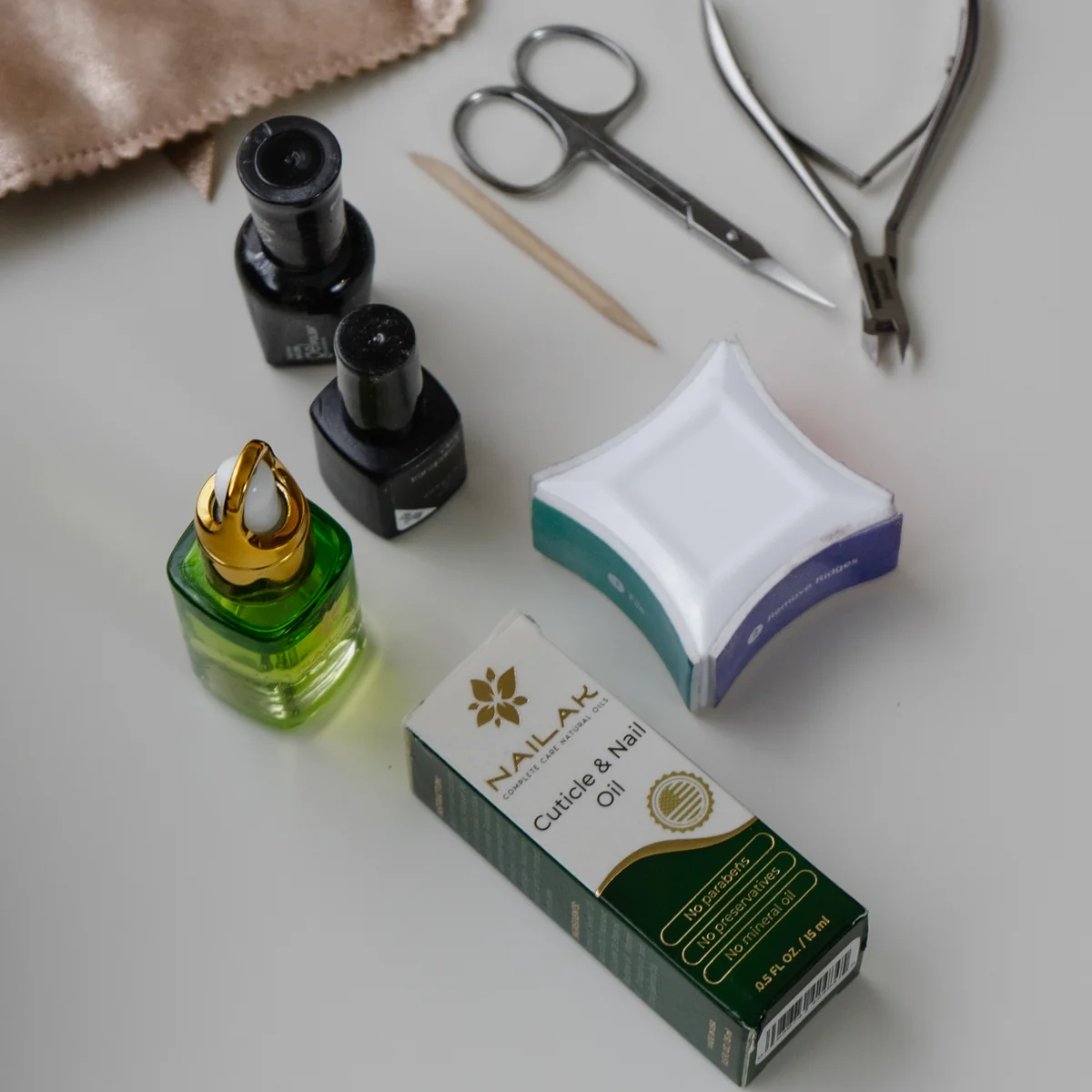
Daily habits that strengthen nails
Little choices make the biggest difference. Build micro-habits into routines you already have.
Micro-habits that matter
- After washing dishes, apply a thin layer of hand cream and a drop of oil.
- Keep a tiny oil pen by your bed and swipe each cuticle before sleep.
- Wear gloves for cleaning and gardening. Protect from chemicals and friction.
- Type with pads of fingers, not tips, to reduce edge stress.
Feed nails from the inside
- Protein supports keratin. Aim for a source at each meal.
- Omega-3s help nail flexibility. Think flax, chia, or fatty fish.
- Biotin can help if you’re deficient, but food-first is wise. Eggs, nuts, legumes.
Hydration cues
- Nails hate extremes. Keep a balanced routine: wash, moisturize, seal.
- Reapply cream midday, especially in air-conditioned or heated spaces.
Many readers are revisiting the basics of hydration, even down to the type of water they drink. A recent wellness piece comparing distilled and spring water reminded us that thoughtful hydration choices ripple into skin and nail health, too, by supporting overall moisture balance and resilience. While nails benefit most from topical care, your daily water habits are a quiet ally. (source: https://dlshealthandbeauty.com/healthiest-safest-best-water-to-drink-distilled-vs-spring-water/?utm_source=rss&utm_medium=rss&utm_campaign=healthiest-safest-best-water-to-drink-distilled-vs-spring-water)
Ingredients to seek (and skip)
Labels can feel like a maze. Here’s a simple guide for your natural nail care routine at home.
Friendly, effective ingredients
- Jojoba oil: Mimics skin’s natural sebum; sinks in fast.
- Squalane: Lightweight, non-greasy moisture.
- Vitamin E (tocopherol): Antioxidant support.
- Panthenol (pro-vitamin B5): Hydrating and soothing.
- Urea (low percentage): Softens rough skin without over-thinning.
- Ceramides and cholesterol: Barrier-building in hand creams.
- Peptides and amino acids: Support keratin structure over time.
Use with caution or skip
- Strong acetone daily: Fine for occasional removal, but drying if overused.
- Formaldehyde hardeners: Temporary stiffness, long-term brittleness for many.
- Excess fragrance: Can irritate the cuticles and periungual skin.
- Coarse buffers: They thin the nail plate quickly.
About removers and bases
- If you wear regular polish, consider a gentle remover with conditioning agents.
- Choose a breathable base coat with plant-based plasticizers and no harsh hardeners.
Your rule of thumb: If it tingles or stings around the nail fold, pause and reassess.
Troubleshooting common nail issues
Even the best routine meets real life. Here’s how to course-correct with grace.
Peeling or flaking edges
- Cause: Waterlogging, aggressive filing, frequent stripping.
- Fix:
- File in one direction with a fine glass file.
- Seal layers with oil twice daily for two weeks.
- Limit water exposure; wear gloves for chores.
- Take a polish break and skip buffing for 10–14 days.
Vertical ridges
- Cause: Normal aging, dehydration, nutrition gaps.
- Fix:
- Use a ridge-filling base for a smooth look without over-buffing.
- Massage cuticle oil nightly to improve flexibility.
- Add protein and omega-3s. Hydrate consistently.
Soft, bendy nails
- Cause: Prolonged soaking, frequent gel removal, harsh chemicals.
- Fix:
- Introduce a gentle strengthening base (no formaldehyde releaser).
- Keep nails a touch shorter to reduce leverage.
- Moisturize, then seal with oil after any water exposure.
Brittle, snapping tips
- Cause: Over-buffing, dry air, sanitizer overload.
- Fix:
- Stop buffing for a month; pat a glow with oil instead.
- Layer a balm over oil at night. Wear cotton gloves to lock it in.
- Swap harsh sanitizers for gentler formulas; moisturize after each use.
Yellowing or stains
- Cause: Dark polishes, spices, smoking, pigment migration.
- Fix:
- Use a stain-blocking base coat before color.
- Short lemon soaks are fine (1–2 minutes), but moisturize immediately after.
- Give nails a polish holiday. Focus on oil and cream.
Post-gel recovery plan (4 weeks)
- Week 1: File gently, oil 3–4 times daily, cream after each wash.
- Week 2: Add a breathable base coat if desired, keep nails short.
- Week 3: Maintain oil twice daily, no buffing, gloves for chores.
- Week 4: Evaluate. If stronger, reintroduce sheer color; if not, repeat week 2.
Remember: Nails grow roughly 3 mm a month. Repair is a process, not a punishment.
A ritual for confidence and calm
There’s something quietly radical about deciding your hands deserve slow care. Not because you have a big event coming, but because ordinary days are worthy of softness. A natural nail care routine at home is a promise you keep with yourself: to choose steady over flashy, nourishment over noise.
Return to your small stage—a bowl, a towel, a familiar oil—and notice how your breath smooths when your fingers do. These minutes aren’t selfish. They are a reset that follows you into emails, errands, and everything in between. Your nails may be the proof, but the gift is how you feel: collected, cared for, a little more you.
Frequently Asked Questions (FAQ)
Q: How often should I do a full natural nail care routine at home? A: Aim for once a week, with small daily touch-ups. Oil and hand cream daily, gloves for chores, and tidy edges midweek as needed.
Q: Which cuticle oil is best for sensitive skin? A: Look for simple formulas with jojoba or squalane and vitamin E, fragrance-free. Patch test on one finger for 24 hours before regular use.
Q: Do I need a hardener to fix weak nails? A: Not usually. Many hardeners rely on harsh chemistry that can lead to brittleness. Try a breathable strengthening base, keep nails shorter, and prioritize oil and cream.
Q: How can I prevent peeling when I love polish? A: Always use a protective base coat, avoid peeling polish off, and use a gentle remover. Build in polish-free weeks every month to let the nail plate rehydrate.
Q: What’s the quickest daily habit that actually helps? A: A single drop of cuticle oil before bed—every night. It takes 10 seconds and, over weeks, visibly improves smoothness and flexibility.
Estimated word count: 1990