
What to Use Instead of Cuticle Remover
The mug steamed on the windowsill, chamomile curling softly into the room. You’re halfway through a Sunday tidy-up: sheets in the wash, playlist humming, and your nail kit spread across a folded tea towel. The light is kind—the kind that makes even the most ordinary chores feel like a pause you chose on purpose. You reach for the tiny bottle that promises to melt your cuticles in seconds, then stop. Last time it worked fast, yes, but the skin around your nails felt strange for days—tight, too shiny, a little angry at the edges. You remember rubbing lotion over your hands during a meeting, trying not to wince.
So you browse the shelves of your bathroom. There’s your favorite facial oil, a delicate cuticle balm you forgot you owned, even a lemon you meant to slice into water. Is there a kinder way to coax your cuticles back? Something that respects skin, not just shine? You’re craving a manicure that looks polished but also feels like a love note to your hands. Because let’s be honest: our hands tell our stories. They hold kids, type plans, carry bags, and reach for life, hour by hour. They deserve the gentler version of everything.
You warm a washcloth under the tap, then drape it over your fingers. The heat seeps in. You can almost feel your cuticles soften without a single drop of chemical help. The idea forms slowly: what to use instead of cuticle remover isn’t a trick—it’s a mindset. It’s about nudging over dissolving, nourishing over forcing. A few minutes later, with a drop of oil and a smooth wooden pusher, your nail edges look calmer, neater, less dramatic. But better—because the skin is still itself.
Maybe the secret to great cuticle care isn’t a product at all. Maybe it’s permission. Permission to slow down, to warm, to soften. To choose tools that behave well with your body. To prioritize long-term health over a 60-second shortcut. When you rinse and pat dry, your hands look exactly like yours—only more loved. The polish you’ll add later is optional. The care you gave yourself isn’t.

A kinder routine can replace harsh cuticle removers with oils, gentle acids, soft tools, and soothing habits that protect skin and deliver a clean, elegant finish.
Why rethink harsh cuticle removers
Cuticle removers work by breaking down keratin so dead tissue lifts quickly. They’re efficient—but efficiency can come at a cost. Many formulas are alkaline or acid-heavy and can overexpose your skin to potent actives. That can mean lingering sensitivity, ragged hangnails, or repeated dryness that gets worse each week.
There’s also the temptation to push too hard or too soon because everything feels slippery. That’s when microtears happen. And those tiny nicks? They invite irritation and make polish chip faster.
If your hands are often in water, if you use hand sanitizer all day, or if your skin simply runs dry, you’re likely familiar with that tight, polished-but-tender feeling. Swapping in gentler options can protect your skin barrier, reduce hangnails, and still give you that salon-sleek look.
Here’s the secret: cuticle care doesn’t need to be dramatic to be effective. It needs to be consistent, precise, and kind.
Know your cuticles: care, don’t cut
Quick refresher. The cuticle is the thin layer of tissue that seals the space between your nail plate and the living skin at the base (the eponychium). It’s your nail’s raincoat—keeping debris and microbes from slipping inside.
- Don’t cut the eponychium (the living rim). It protects your nail matrix.
- Avoid ripping or scraping. If something resists, it’s probably living tissue.
- Aim to lift and remove only what is dead, dull, and flaky.
Healthy cuticles make manicures last longer. They also reduce those painful side splits that catch on sweaters. Respect the biology, and the beauty follows.
Gentle alternatives that actually work
What to use instead of cuticle remover? Think soften, lift, nourish, and protect. These options are effective and kind.
Oils and balms
Oils dissolve oils. They can also loosen dead skin so it slides away without force.
Great options:
- Jojoba oil: closest to skin’s natural sebum; absorbs fast.
- Sweet almond oil: softening with a vitamin E boost.
- Squalane: silky slip without greasiness.
- Shea or mango butter balms: occlusive comfort for dry edges.
How to use:
- Wash hands with a mild cleanser.
- Apply a drop of oil to each cuticle and massage for 60–90 seconds.
- Let it sit for 2–3 minutes to soften the seal.
You’ll feel the skin relax. This step alone can halve your pushing time.
Soaks and natural acids
Water and gentle acids loosen dead keratin.
- Warm water soak: 3–5 minutes with a pinch of gentle soap.
- Milk soak: lactic acid naturally softens and hydrates. Mix 1 part warm milk to 1 part water for 3 minutes.
- Lemon-water spritz: tiny bit of citric acid helps—use sparingly if skin is sensitive.
Tip: Pat dry and follow with oil immediately. Moisture plus emollients is the winning duo.
Enzymes and mild exfoliants
If you like a product step, choose gentle.
- Papaya or pineapple enzymes: buffet away dead skin with less sting.
- Lactic acid toners (very low strength): swipe lightly around, not on, living skin; follow with oil.
Go low and slow. Weekly use beats a single harsh session.
Tools: pushers, erasers, buffers
Your tools do the heavy lifting—kindly.
- Wooden/orange stick: precise, soft-edged, and disposable.
- Silicone pusher: flexible and friendly to curves.
- Glass cuticle pusher: smooth glide with less scraping.
- Cuticle eraser pencil: often oil-based with a soft tip to nudge flakes.
- Ultra-fine buffer: a couple of gentle swipes to smooth peeling edges on the nail plate.
Keep pressure light. Aim for glide, not dig.
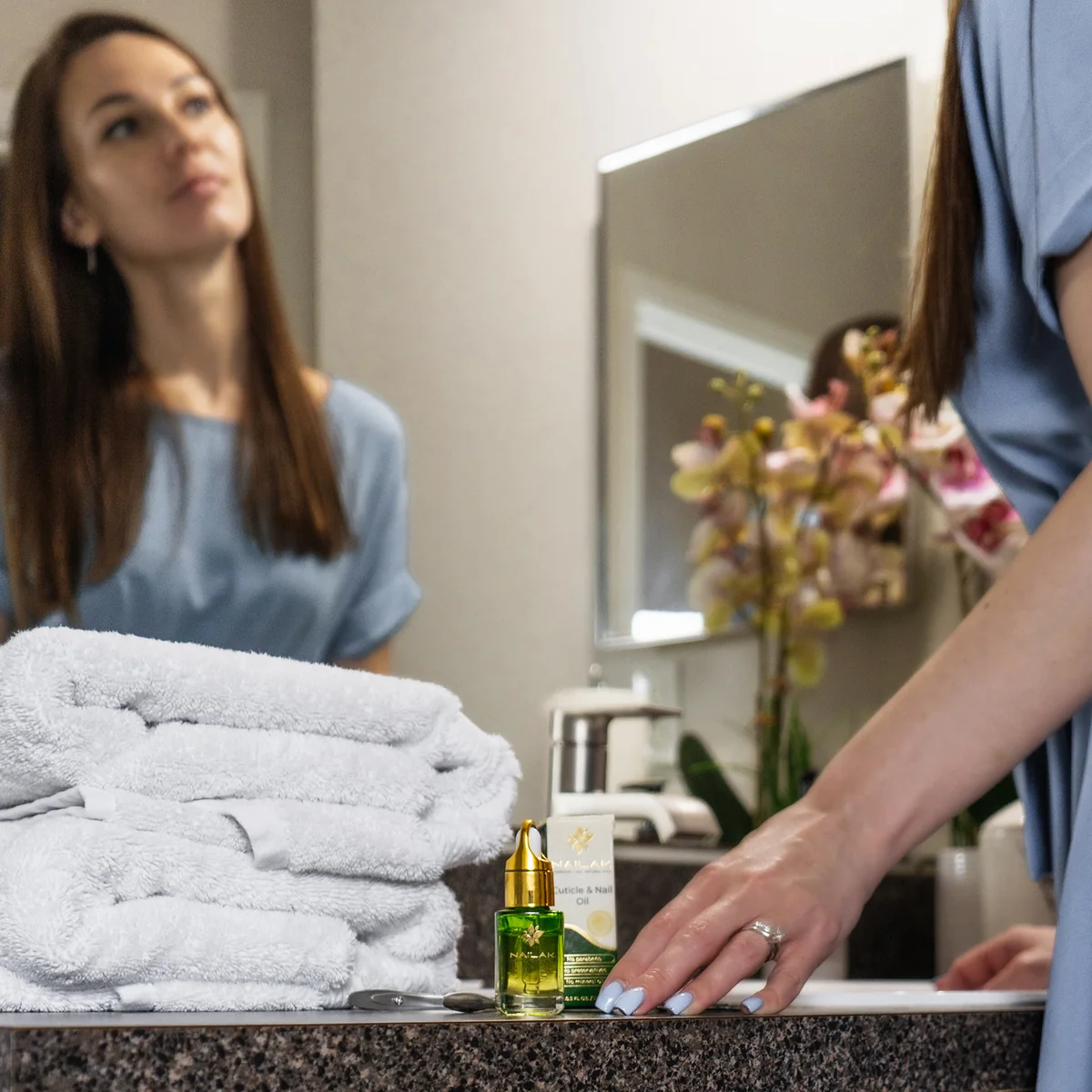
Step-by-step: a cuticle-safe manicure at home
Let’s turn these ideas into a graceful ritual.
- Prep and soften
- Wash hands in lukewarm water with a fragrance-free cleanser.
- Soak fingertips for 3 minutes in warm water or a warm milk mix.
- Pat dry and apply a drop of jojoba or squalane to each cuticle.
- Nudge, don’t scrape
- Use a wooden or silicone pusher at a shallow angle.
- Gently trace small circles where the cuticle meets the nail.
- If tissue resists, reapply oil and wait 60 seconds.
- Tidy the loose bits
- Use a cuticle eraser pencil or the rounded end of an orange stick to sweep away softened flakes.
- Only trim obvious hangnails that are completely detached. Use sharp, sanitized nippers and snip once—never tug.
- Smooth the plate
- Lightly buff only if there’s peeling or residue. Two to three passes max with a fine buffer.
- Seal in moisture
- Massage a richer balm into the cuticle line.
- Finish with hand cream, focusing on the backs of hands.
- If polishing
- Cleanse the nail plate with a quick swipe of alcohol or non-acetone remover to remove oil from the nail (not the skin).
- Apply base coat, color, and top coat. Cap the tips for longer wear.
Micro-tip: Keep a tiny oil near your keyboard. One midday drop per nail can change your whole week.
A quick style note. Trying new spaces often reminds us what “care” feels like in practice. In one recent salon-review post, the author describes the confidence shift that comes from feeling listened to in a new setting. That same attentive approach—gentle prep, tailored steps, and minimal force—applies beautifully to cuticle care at home, too (source: https://sarahfynn.com/2025/08/18/snm-salon-experience/).
Ingredient guide: what to look for (and avoid)
When you’re skipping traditional removers, your formulas matter more.
Look for:
- Humectants: glycerin, hyaluronic acid, panthenol to draw water in.
- Lightweight emollients: jojoba, squalane, meadowfoam seed oil.
- Barrier helpers: ceramides, cholesterol, shea butter for sealing.
- Gentle exfoliants: lactic acid, fruit enzymes in low concentrations.
Be cautious with:
- High-pH removers or heavy-duty alkalis: fast but often irritating.
- High concentrations of AHAs/BHAs around live skin: better on the nail plate edges, not the eponychium.
- Strong fragrances and essential oils if you’re sensitive: citrus, peppermint, and tea tree can sting.
- Overuse of alcohols: great for de-oiling the nail plate before polish, drying for skin.
Labels are your roadmap. If a product tingles sharply or turns skin glassy-tight, scale back.
Troubleshooting common cuticle issues
Even with care, life happens. Here’s how to handle the usual suspects.
Ragged edges and peeling
- Cause: dryness, over-sanitizing, or aggressive scraping.
- Fix: switch to nightly oiling plus a weekly milk soak. Keep a balm in your bag. Buff flaking nail edges sparingly.
Persistent hangnails
- Cause: repeated stress, biting, or low-grade dehydration.
- Fix: stop biting triggers; keep nippers for clean snips only. Add a richer balm at bedtime and cotton gloves for 30 minutes to seal.
Redness or tenderness
- Cause: product overuse or microtears.
- Fix: pause exfoliants and polish remover for 48–72 hours. Use a bland barrier cream. Resume gentle care once calm.
Cuticles that overgrow fast
- Cause: natural variation, water exposure, or infrequent maintenance.
- Fix: micro-maintenance. Two-minute oil massage every night and a three-minute warm soak twice a week. Push lightly post-shower.
Polish lifting at the base
- Cause: oil left on the nail plate or not removing all dead tissue.
- Fix: cleanse the nail plate only (avoid surrounding skin) with a lint-free pad and alcohol. Push gently again, then proceed with base coat.
Pro tip: Think like skincare. Alternate “treatment” days and “recovery” days. Your cuticles will behave better when they’re not constantly in performance mode.
What to use instead of cuticle remover: your toolkit
Build a small capsule set that works every time.
- Softener: jojoba or squalane dropper bottle.
- Soak: a small bowl and a splash of warm milk or mild soap.
- Pusher: wooden stick for precision; silicone for comfort.
- Eraser: oil-based cuticle eraser pencil.
- Balm: shea or ceramide-rich for sealing at night.
- Buffer: ultra-fine, used sparingly.
- Sanitizer: 70% isopropyl alcohol to clean tools, not skin.
Three to five minutes of this toolkit beats 30 seconds of harsh gel. Your results will look subtly better within a week and significantly better in a month.
Actionable mini-habits:
- After every handwash, while skin is damp, press in a pea-size hand cream.
- Keep a cuticle oil at your desk and use it after lunch.
- Add a three-minute warm soak on Sundays, followed by a gentle push.
- Sleep with balm on cuticles twice a week.
- If you must trim, trim once, precisely, and only what’s detached.
Ritual over rush: a softer path to polish
This is the quiet power of routine. When you choose warmth, oil, and patience, you’re not just cleaning up edges—you’re teaching your hands they can trust you. That trust shows up as fewer hangnails, a smoother nail base, and polish that wears like satin.
More importantly, it shows up as a pause in your day that’s about you. You can feel the smoothness as a wooden pusher glides, hear the faint clink of a glass file, notice the way your breath deepens without instruction. That tiny ceremony becomes a north star for the rest of your week: steadier, kinder, more intentional.
Maybe you started this journey wondering what to use instead of cuticle remover. You might end it with something better—a ritual that respects small things, and by extension, respects you. That’s the kind of polish no bottle can buy.
Frequently Asked Questions (FAQ)
Q: What can I use instead of cuticle remover at home? A: Use a warm soak, cuticle oil or balm, and a wooden or silicone pusher. Gentle enzymes or low-dose lactic acid can help weekly, followed by a nourishing hand cream.
Q: Is it safe to cut my cuticles if I don’t use remover? A: Avoid cutting living cuticle tissue. Only trim detached hangnails with sanitized nippers. Focus on softening and pushing, not cutting, to protect the nail matrix.
Q: Which oil is best for daily cuticle care? A: Jojoba is a standout because it mimics skin’s natural oils and absorbs quickly. Squalane and sweet almond are great alternatives if you prefer a silkier or richer feel.
Q: How often should I push back my cuticles? A: Lightly once or twice a week is enough for most people, ideally after a shower or a brief warm soak. Daily oiling keeps the process quick and gentle.
Q: Can gentle acids replace traditional cuticle remover? A: Yes, low-strength lactic acid or fruit enzymes used sparingly can loosen dead skin over time. Keep them away from raw or irritated areas, and follow with oil and balm.
Estimated word count: 1,970